
New York
Amazon says more than 100,000 New Yorkers have emailed City Council members since November 19, urging them to oppose Intro 518, known as the Delivery Protection Act.
The proposed legislation would require major delivery companies operating last-mile facilities in the city to directly employ drivers rather than rely on third-party contractors. Amazon has warned that the measure could increase delivery costs by up to $5 per order and force it to consider moving operations outside New York City, threatening small delivery businesses and thousands of jobs. The company has used in-app banners, pop-ups, and stickers on packages to direct customers to a form for contacting their council members. Supporters, including Mayor Zohran Mamdani and the bill’s sponsor, Council Member Tiffany Cabán, argue that the law would strengthen worker protections, improve safety, and hold large corporations accountable without necessarily raising prices. The measure has backing from a supermajority of the City Council, though a vote has not yet been scheduled.

New York Gov. Kathy Hochul has vetoed legislation that would have banned potassium bromate, an additive commonly used in pizza and bagel dough, along with Red Dye 3 and the preservative propylparaben. The Food Safety and Chemical Disclosure Act would also have required food companies to disclose more information about ingredients they treat as generally recognized as safe by the FDA. Hochul’s office said the proposed restrictions could raise grocery prices, increase costs for businesses, and put New York at a competitive disadvantage as the only state with such a ban. The governor is urging the FDA to strengthen federal oversight of food additives instead, noting that the agency has already moved to ban Red Dye 3, effective in 2027. The measure had passed both houses of the Legislature earlier this year amid lobbying from both health advocates and business groups.
New York Attorney General Letitia James joined 21 other state attorneys general and Pennsylvania’s governor in suing the Trump administration over a new Department of Housing and Urban Development rule that would eliminate federal housing assistance for entire households if even one member is ineligible because of immigration status. The coalition argues that the rule violates federal law that has long allowed reduced, prorated subsidies for eligible family members in mixed-status households, reversing nearly 30 years of policy. HUD estimates that the change would affect roughly 20,000 mixed-status families totaling about 78,100 people, including tens of thousands of U.S. citizen children. New York City and other local governments filed a separate challenge to the same rule, which is set to take effect December 14. HUD Secretary Scott Turner has said that the measure ends the exploitation of taxpayer dollars and reallocates up to $218 million to eligible Americans currently on waiting lists.

Mayor Mamdani has signed legislation ending the city’s horse-drawn carriage industry after 150 years, with carriages required to stop operating on city streets by June 1, 2028. Known as Romanch’s Law, the measure honors 18-year-old Romanch Mahajan, who died following a horse-drawn carriage accident in Central Park on June 17. The administration said it will support roughly 200 affected workers, including medallion owners, drivers, and stable hands, through medallion buybacks, stipends, and workforce development programs, with a full transition plan expected by April 2027. The City Council approved the bill last month. Carriage industry workers have filed a lawsuit challenging the ban, arguing that it is unconstitutional and threatens their livelihoods.

New Yorkers facing soaring housing costs are increasingly relocating to Philadelphia, about 90 miles away, where home prices are substantially lower and buyers can obtain more space. Philadelphia is drawing former New Yorkers seeking an urban lifestyle without the financial strain of the nation’s largest city. Bank of America Institute data show that 27 percent of people who moved to the Philadelphia metropolitan area in 2025 came from the New York region. Redfin reported that Philadelphia was the leading destination for New York-area homebuyers looking to relocate in the second quarter of 2026. The typical home in Philadelphia costs approximately $309,000, compared with $832,000 across the New York metropolitan area.
Mayor Mamdani announced that he will undergo surgery after tearing his Achilles tendon while playing soccer last week. He expects to be under anesthesia from 9 a.m. to 2 p.m., during which time the first deputy mayor will oversee day-to-day city operations. The 35-year-old mayor sustained the noncontact injury during a friendly match between City Hall staff and members of the press corps, which his team won 10–5. Mamdani has said that he expects to remain in a boot for six to eight weeks and will not play soccer again for about nine months. He arrived at subsequent public events using crutches and wearing a medical boot.

Mayor Mamdani announced an agreement with Lyft to cap Citi Bike electric bicycle fares at $3.65 for rides of up to 45 minutes and freeze key membership prices through May 2029. The new fare cap, which takes effect January 19, 2027, will apply to Citi Bike members, including participants in the Reduced Fare Bike Share program. Riders will pay no more than $3.65 for an e-bike trip lasting up to 45 minutes. Shorter rides that currently cost less will remain at their existing prices. City officials said the change could save riders as much as $8.50 per trip and reduce maximum fares by more than two-thirds. The agreement also freezes annual membership fees, member per-minute e-bike charges, and overage fees at current rates through May 26, 2029, when Lyft’s contract with the city expires.
U.S.
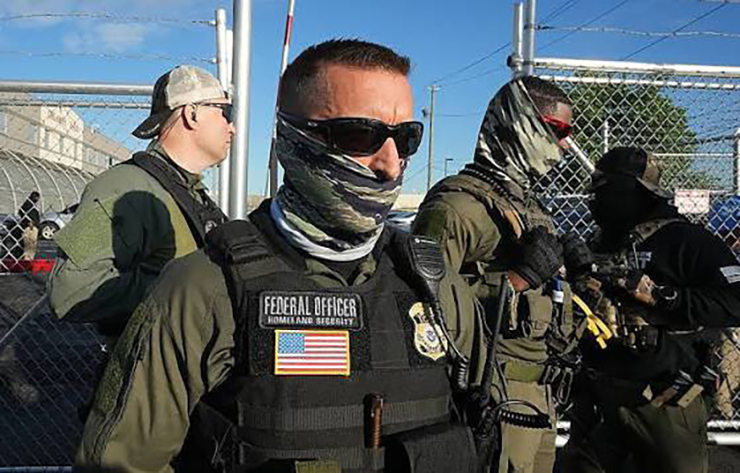
The U.S. Court of Appeals for the Fourth Circuit ruled that Virginia cannot enforce a law banning federal immigration agents from wearing masks or requiring them to display ID during operations, finding the restrictions likely unconstitutional under the intergovernmental immunity doctrine. The three-judge panel affirmed a preliminary injunction blocking the mask-and-identification measure as applied to federal officers performing federal duties. At the same time, the court lifted an injunction against a separate Virginia law that limits state and local police cooperation with U.S. Immigration and Customs Enforcement, allowing those restrictions to take effect while litigation continues.
The FBI arrested a 34-year-old from Georgia for allegedly transferring more than $26,000 in cryptocurrency to individuals and groups affiliated with the Islamic State of Iraq and al-Sham. The transfers included approximately $9,206 sent in 11 transactions between December 2021 and April 2022 and another $16,807 between December 2025 and June 2026, with at least some funds intended to support terrorist operations in Syria. Agents who searched his apartment discovered three damaged cellphones submerged in liquid, including one that had been smashed, along with shredded documents soaking in a bathtub. The man faces federal charges of international money laundering and destruction of evidence. Each count carries a maximum penalty of 20 years in prison.

Nvidia announced Monday that its board had unanimously reinstated Jensen Huang as president and chief executive officer, effective immediately. Nvidia shares surged more than 30 percent, adding roughly $1 trillion in market value in one of the largest single-day gains on record for any company. The Nasdaq Composite jumped nearly 7 percent, while the S&P 500 gained around 5 percent, as the rally spread across major technology and artificial intelligence stocks. The move reversed part of last week’s steep sell-off, which had followed Huang’s resignation earlier this month. Nvidia’s board said it had received input from senior levels of the U.S. government and was satisfied that Huang’s return posed no national security risk. Huang had co-founded the company more than three decades ago and led it through its rise to dominance in AI chips.
The Federal Communications Commission voted to bar China Mobile, China Telecom, China Unicom, and other Internet Protocol-enabled service providers from directly obtaining U.S. phone numbers. The agency cited national security concerns and the need to combat scam robocalls as the basis for the restrictions. The rules also apply to providers that use equipment from companies on the FCC’s national security blacklist, including Huawei and ZTE. The commission had previously barred the three major Chinese carriers from providing international telecommunications services to the United States. Direct access had allowed Voice over Internet Protocol operators to acquire numbers without routing through intermediate carriers. China has opposed the action and warned of possible countermeasures.
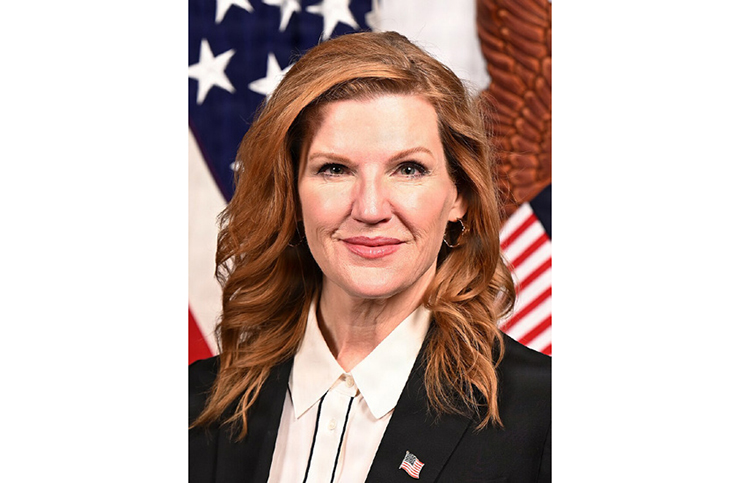
The White House named Kirsten Davies as the new national cyber director after a series of widespread service outages disrupted air travel, banking, and other systems and unnerved many Americans. Davies, who has served as chief information officer at the Defense Department, will fill the role in an acting capacity, according to social media posts by several members of President Trump’s Cabinet. She replaces Sean Cairncross, who had held the position since his Senate confirmation in 2025. The Office of the National Cyber Director advises the president and coordinates cybersecurity policy and strategy across the federal government. The recent outages included a nationwide halt to flights, a Microsoft service disruption, and problems at banks and the National Security Agency’s internal network. A permanent successor will require Senate confirmation.
A magnitude 3.9 earthquake struck the Los Angeles area, according to the U.S. Geological Survey. The quake was centered near Commerce, about seven to eight miles from downtown Los Angeles, at a depth of roughly 10 miles. Its magnitude was initially reported to be as high as 4.4 before being revised downward. Shaking was widely felt across Los Angeles County and as far away as Anaheim and San Bernardino, waking many residents. There were no immediate reports of damage, injuries, or a tsunami threat. No operational impacts were reported, including at LAX.
Israel
Israel Police have disabled several internal communication systems amid concerns over a possible cyberattack and the potential exposure of sensitive or classified information. The disruption has affected operational applications, including the Misseronet messaging platform used by officers and commanders to exchange real-time updates and instructions. Police deliberately took the systems offline as a precaution, significantly limiting the force’s ability to transmit operational information to personnel in the field. Approximately 100,000 police personnel have been ordered to reset their passwords as part of an extensive security response. Authorities described the episode as a complex technological incident and are investigating whether it resulted from a cyberattack or a technical malfunction.

The Palestinian Authority reached an out-of-court settlement last month with Rabbi Leo Dee, whose wife, Lucy, and two daughters, Maia and Rina, were murdered in a Hamas terrorist attack in the Jordan Valley in April 2023. Dee had filed a roughly £10 million lawsuit against the Palestinian Authority in a British court last year, arguing that its so-called pay-for-slay program, which provides financial support to terrorists and their families, incentivized the attack. “They settled faster than I could have anticipated,” Dee told JNS. “I now understand that they had no defense against our claim that they were financing the terrorists who murdered my wife and daughters,” he said. The Palestinian Authority did not admit liability, but the confidential settlement is understood to involve a substantial payout drawn from funds frozen by an Israeli court. Dee was represented by the Tel Aviv-based organization Shurat HaDin.

Amazon has confirmed an agreement to acquire the proprietary technology behind the Decart Optimization Stack (DOS), developed by the Israeli AI startup Decart, in a deal reportedly valued at $7.5 billion. The technology helps AI systems run faster and more efficiently across different chips, including those from Nvidia, Amazon, and Google. Decart’s three co-founders, Dean Leitersdorf, Moshe Shalev, and Orian Leitersdorf, will join Amazon along with the company’s AI researchers and engineers. Amazon has not publicly confirmed the deal’s value, though multiple reports cite the $7.5 billion figure. The agreement follows earlier collapsed talks involving Anthropic and Nvidia and is aimed at strengthening Amazon’s custom AI chips. The deal is subject to regulatory clearance, and the founders have agreed to remain with Amazon for five years.

El Al announced that it will resume direct flights from Israel to Marrakech on December 21, operating twice weekly on Mondays and Wednesdays, with round-trip fares starting at $599. Arkia will follow on January 4, offering twice-weekly service with one-way fares beginning at $299, while Israir is also expected to restore flights to the destination. The return of the route follows security approvals from Israeli authorities after earlier restrictions disrupted Israeli airline operations to Morocco. Direct service had been suspended since October 2023, following the outbreak of the war in Gaza. Arkia and Israir briefly resumed flights earlier this year before suspending them again amid tightened security directives. Those measures followed an attempted hijacking of a flydubai flight bound for Tel Aviv.
World

Argentina’s Chief Rabbi, Rav Eliahu Hamra, has formally asked President Javier Milei and senior officials to postpone the national elections scheduled for October 24, 2027, because the date coincides with Simchas Torah. Rav Hamra warned that holding the vote on the holiday would prevent observant Jews from participating, as religious restrictions prohibit travel, writing, and other activities required to cast a ballot. He specifically requested a date after the conclusion of the Yamim Tovim, noting that moving the election one week earlier would also conflict with the second day of Sukkos. The appeal cites constitutional protections for religious freedom, equality before the law, and political participation, along with international human rights agreements.
Australian police arrested a man in the greater Sydney area on charges of researching how to build a car bomb and downloading violent material inspired by the Islamic State group. Police said they found no evidence of a link to the upcoming first anniversary of an IS-inspired attack at Sydney’s Bondi Beach. Two gunmen opened fire on a December 14 Chanukah celebration, leaving 15 people dead and 40 wounded. The man was charged with collecting documents likely to facilitate terrorist acts and possessing violent extremist material obtained online. The man researched how to build a vehicle-borne improvised explosive device for potential use in a terrorist act. Police said the arrest was not prompted by an imminent threat and that he was believed to have acted alone.
A major cyberattack has disrupted European Commission systems for more than 10 days and may have exposed sensitive employee data. Hackers reportedly used ARTEX, a publicly available AI-powered hacking tool, to target internal networks, affecting payroll, leave management, medical reimbursements, and translation services. The Commission detected the activity on October 22 and described it as an AI-generated cyber campaign, taking several applications offline as a protective measure. Most systems have since been restored, though some experienced brief additional outages. Investigators are still determining the full extent of the breach and whether personal information was stolen
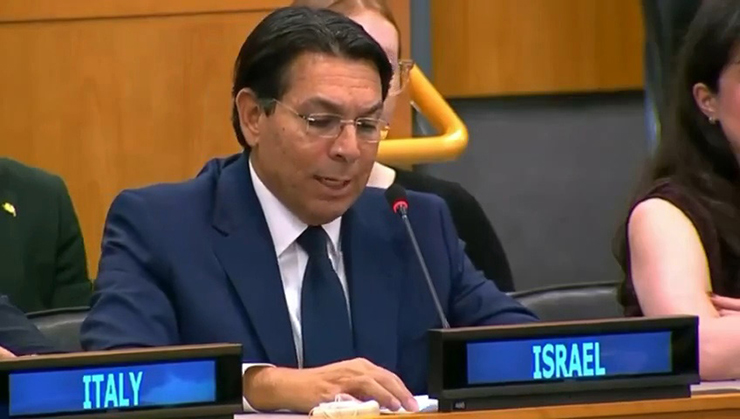
The United Nations adopted an Israeli-initiated resolution titled “Entrepreneurship for Sustainable Development,” with 145 countries voting in favor, 27 against, and eight abstaining. The measure, jointly sponsored by Israel and several other countries, highlights the role of entrepreneurs and small and medium-sized businesses in driving economic growth, job creation, and practical solutions to global challenges such as food security, sustainable agriculture, climate and energy technologies, the digital economy, and artificial intelligence. It also calls for greater participation by women, young people, and underrepresented groups, as well as stronger international cooperation on incubators, research and development, and technology transfer.