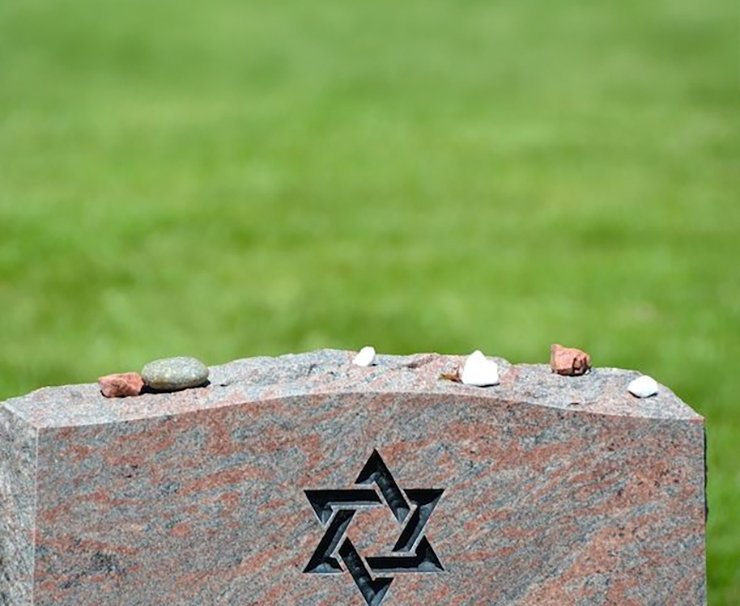
Several years ago, this writer was involved in a painful and eye-opening experience. A woman who had no immediate family except for a nephew became ill and was hospitalized. A friend and I visited her regularly. Sadly, she was niftar, and afterward her nephew informed us that she wished to be cremated.
We reached out to Rabbi Elchonon Zohn, director of the Chevrah Kadisha of Queens and of NASCK (National Association of Chevra Kadisha), to ask for his help. Rabbi Zohn spoke with the nephew multiple times, gently and respectfully trying to persuade him otherwise. He even offered financial assistance for the burial, though money was not the issue. Ultimately, despite all efforts, the nephew insisted that this was his aunt’s wish. The outcome was heartbreaking, but it left me with a powerful lesson: We cannot wait until a crisis to have important conversations. We must clearly and compassionately explain to non-observant Jewish people in our circle why cremation is not appropriate for a Jewish person.
This message is at the heart of the Shabbos Vayechi program this Shabbos, which focuses on rabbanim encouraging families to discuss and make responsible end-of-life preparations. Parshas Vayechi was chosen intentionally. It describes Yaakov Avinu preparing for the end of his life: requesting to be buried in the proper place, giving clear instructions, blessing his children, and ensuring that his wishes were understood. Chazal teach that Yaakov was the first person to become ill before passing away, something he davened for so he could prepare properly.
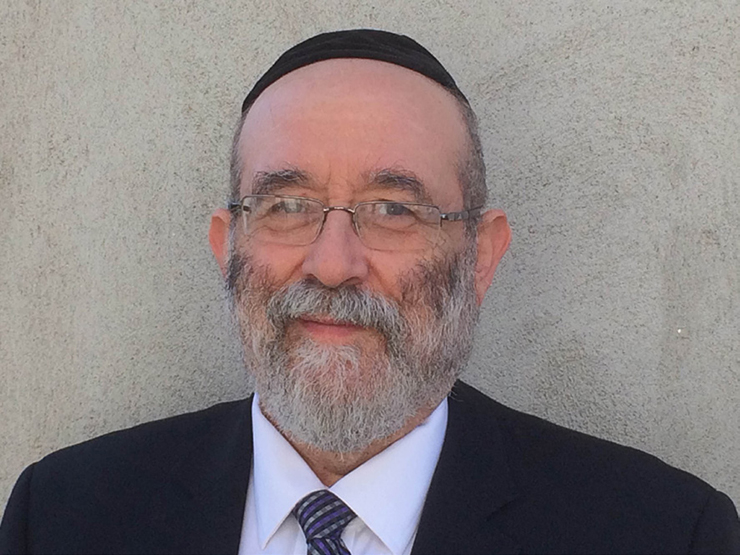
When Rabbi Zohn began the Shabbos Vayechi Program in the 1980s, the primary issue was raising awareness about burial according to halachah. At that time, there were practices such as embalming, viewings, and other customs that were not in keeping with kavod ha’meis and were antithetical to halachah. The Vaad Harabonim therefore focused on educating the community about the importance of taharah, tachrichim, and shmirah.
Today, however, the central issue has shifted. Increasingly, Jews are opting for cremation. Shabbos Vayechi now focuses on addressing this trend and educating people about the importance and meaning of proper Jewish burial.
We are encouraged to speak with people in our own circles – family members, friends, and coworkers – and to help them understand and to choose k’vurah k’halachah. This requires opening respectful conversations and offering a Torah perspective.
Accordingly, the goal of this year’s Shabbos Vayechi initiative is twofold. First, it emphasizes the importance of ensuring that burial is done according to halachah, including understanding how to choose a kever. Second, it encourages reaching out to non-frum family members, friends, neighbors, and acquaintances, offering guidance and assistance so that they, too, can merit a proper Jewish burial.
Rabbi Zohn explained that every Jew is endowed with a neshamah. It is what makes us special – even the bodies that contain the neshamah. We bury what we treasure, while we burn things that are disposable or insignificant. Hashem told Adam HaRishon that he was created from dust and would return to dust. From this we learn that the body Hashem gives us is a sacred gift, a holy vessel, that must be treated with respect.
There is also a deep historical and communal aspect to burial. Cemeteries tell a story – not only of individuals, but of a community. When a person is buried among family, their place in history remains. Cremation erases that presence, as if the person never existed. Beyond this, there are serious religious and eternal consequences as well.
These conversations happen daily at NASCK, and, baruch Hashem, they are often successful. At a cemetery in Florida founded and operated by NASCK, 70 percent of those buried were initially considering cremation. Many believed they could not afford a Jewish burial. Often, people who attend a burial at South Florida Jewish Cemetery find the experience meaningful and inspiring; then they come to the office to purchase graves for themselves or their families.
Frequently, people choose cremation simply because they do not know how to buy a grave or feel overwhelmed by the process. Cremation is what their friends are doing – it seems cheaper and much easier. There is also a societal mindset of “not wanting to burden the children,” which, of course, is not aligned with Torah values. The Torah teaches the opposite: A child giving kavod to a parent is the greatest z’chus.
Cremation is often represented as better for the environment. This is patently false. The huge amounts of carbon emitted into the atmosphere, and the fossil fuel wasted to keep a crematory at 1,800 degrees for two to three hours, make it extremely harmful to the environment. On the other hand, traditional Jewish burial – without embalming, without a vault, and with a simple pine box – is as green as can be.
Another powerful point to share with someone considering cremation is how important burial is for their children. Having a place to visit and connect after a parent is niftar is far more meaningful than being remembered only through a will. When these discussions are approached respectfully and thoughtfully, they can truly make a difference.
There are several excellent resources available to help guide these conversations: www.shabbosvayechi.org, www.lastkindness.org, and www.endcremation.org.
History And Thank Yous
In 1981, Rabbi Zohn took over as director of the Chevrah Kadisha of the Vaad Harabonim of Queens. The Vaad was deeply involved and instrumental in its work, and our community owes tremendous hakaras ha’tov to many individuals.
Special thanks are due to Rabbi Yitzchok Sladowsky z”l, who served as Executive Vice President from the 1970s until his passing. Continued gratitude is owed to Rabbi Peretz Steinberg shlita, Rabbi Emeritus of the Young Israel of Queens Valley, who has been and remains the poseik for the Chevrah for over 45 years. He is a mentor and close friend of Rabbi Zohn and holds great stature in our community.
We also thank former kashrus administrator Rabbi Chaim Schwartz, as well as the current kashrus administrator, Rabbi Chaim Tuvia Hanson. A special thank you goes to Rabbi Herschel Welcher shlita, President of the Vaad Harabonim of Queens, Rabbi of Congregation Ahavas Yisroel, and a long-time friend of Rabbi Zohn. Rabbi Welcher is deeply involved in every aspect of the Chevra and stands firmly behind Rabbi Zohn in all his work for the Vaad, the Chevrah, and NASCK.
Rabbi Marty Katz, Vice President of the Vaad Harabonim of Queens, is also a dear friend of Rabbi Zohn and has consistently supported him. “There truly are not enough words to express our gratitude for all that Rabbi Zohn does. As it is often said, if you need something done, give it to a busy person. Rabbi Zohn is available 24/six, taking calls from around the world, yet always making time. His heart is completely in this work; he genuinely cares about every single Yid.”
It is a special privilege for this writer to write this article. Our community is incredibly blessed with devoted individuals who volunteer and work tirelessly on our behalf, as well as with beautiful achdus among organizations and rabbanim. May Hashem continue to bless our community, our rabbanim, and the organizations that perform so much chesed for klal Yisrael.