Before He Was Prime Minister: Philadelphia Magazine Revisits Bibi’s Teen Years
Israeli Prime Minister Benjamin “Bibi” Netanyahu grew up in West Jerusalem but spent his high...
 Queens Jewish Link
Connecting the Queens Jewish Community
Israeli Prime Minister Benjamin “Bibi” Netanyahu grew up in West Jerusalem but spent his high...


The summer of 2007 was not an easy one for my family. I tried my absolute hardest to provide my young children with an enjoyable and “normal” summer while simultaneously caring for my ailing mother during the final months of her life. Cloaked with the façade of a calm and carefree spirit, I tried to take my kids on educational outings, read with them, play with them, and entertain my charges, just as I would during any other vacation. In my wish to keep them happy and constructively busy, it seems I let my guard way down and in a totally out of character occurrence, I agreed to let the school rabbit live in our home over the course of the summer. I am no animal lover (unless they’re stuffed), and this extra dependent minor was not something I needed to add right then to my already full plate. But before I knew it, “Rebbie Rabbit,” as he was affectionately (to some) known, was running around my living room, scattering his wood shavings in his wake. At least my kids were kept busy with something wholesome.
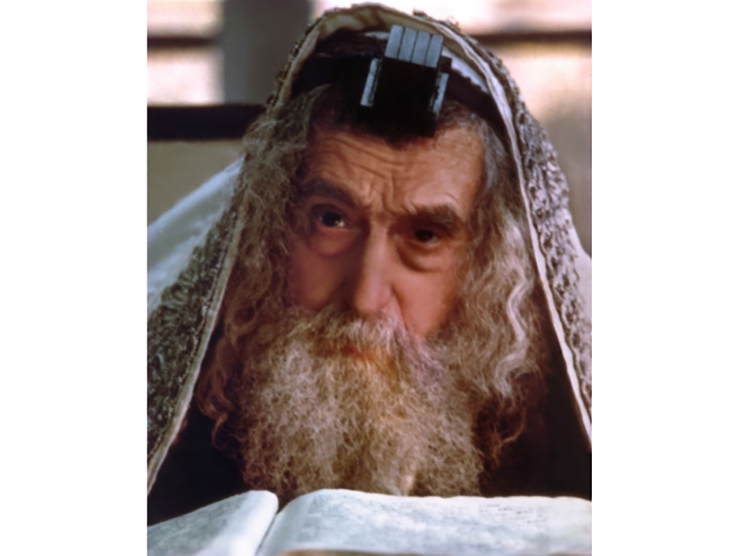
It was a sunny summer’s day in Miami Beach, back in the ‘70s, when my husband and his good friend, Chaim*, were hanging out at my husband’s home. As my mother-in-law was a very talented cook and could have taught Martha Stewart a thing or two, Chaim was looking forward to a hot and tasty dinner. But it was Mincha time, so the boys figured they would daven first and then come back and enjoy a savory meal. My husband knew that those days, the Ribnitzer Rebbe had been davening down the street and was having some difficulty making a minyan.
The world has become a pretty scary place. Clearly, Hashem runs the world and orchestrates things precisely as they are meant to be. Yet, for some reason, we are under the impression that if we just do the right things in the right way at the right time, all will be well. Maybe it’s a defense mechanism, so that we won’t walk around all day trembling in fear. But whatever the case may be, we think that certain things are within our control. When the corona virus rages uncontrolled in the outside world, we can cozy up and spend quality time with our family inside our homes and feel somewhat safe. We can ward off the virus. Similarly, when rockets are fired in our direction from evil enemies bent on our destruction, we can opt to keep within close range of our protected rooms, and rush for cover when necessary. We’ve got this.

My family recently spent a long weekend in Avnei Eitan, the southernmost religious settlement in the Golan Heights, east of the Kinneret. Avnei Eitan has a very rustic and peaceful feel, especially noticeable in our somewhat isolated tzimmer (small house or bungalow) overlooking the beautiful fields. Despite the heat, the air was fresh, the skies were clear, and I didn’t mind at all being woken up to the cackling of roosters and chickens walking through the garden. On Friday night, those of us who went to shul davened in a tented outdoor minyan, a remnant of the earlier corona restrictions. My children recognized the man who gave an eloquent d’var Torah in between Kabbalas Shabbos and Maariv from a video they had watched as young children about life in Gush Katif. In August 2005, the 8,600 residents of Gush Katif were forcefully removed from their homes, their communities demolished, as part of Israel’s unilateral withdrawal from the Gaza Strip. When I told the man how much my kids had enjoyed his video, he told me that although he had traveled to Gush Katif to film the video, he had never actually lived there. In 1982, he had moved to Avnei Eitan from Yamit, an Israeli settlement in the northern part of the Sinai Peninsula, which had been sadly given over to Egypt at that time. It seems that settlement ideology flows through his veins.
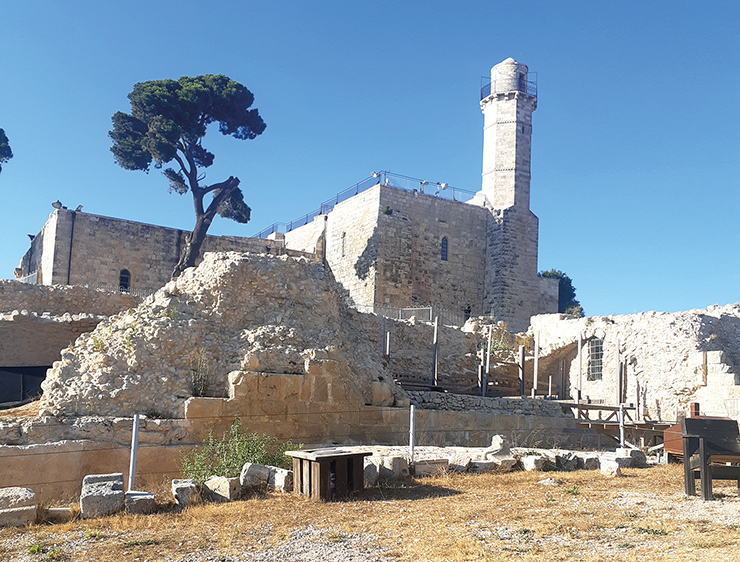
I often get calls from friends and relatives from the old country asking me to daven on their behalf at the Kotel, Kever Rachel, or any other holy place. Recently, after receiving such a request, my husband and I set out for Yerushalayim. On the way, instead of going to our usual destinations, we decided to go to the kever of Shmuel HaNavi, located immediately past the Ramot neighborhood of Yerushalayim. I believe the last time I was at this kever was when I visited Israel with my family as a child. It has obviously undergone some major changes since then.
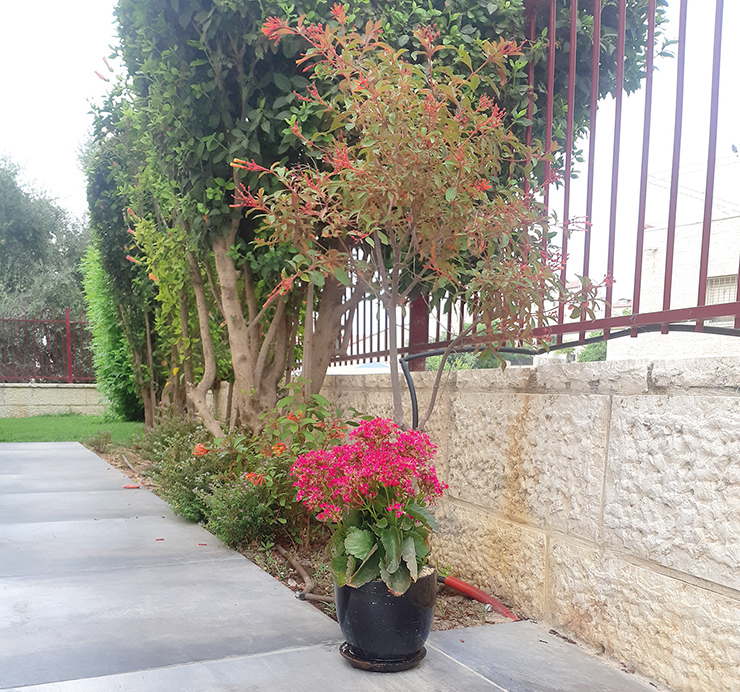
In appreciation for the beautiful sheva brachot my neighbors organized for our son and daughter-in-law, my husband and I decided to buy them a plant. We knew that while she made it look effortless, Dina* worked very hard to make sure everything was just perfect, so we wanted to get her the perfect gift. We went to the nursery and strolled around until we found just the right plant, green and leafy with a burst of color. Then we picked out a flower pot that would match the décor of their well-tended garden.