Before He Was Prime Minister: Philadelphia Magazine Revisits Bibi’s Teen Years
Israeli Prime Minister Benjamin “Bibi” Netanyahu grew up in West Jerusalem but spent his high...
 Queens Jewish Link
Connecting the Queens Jewish Community
Israeli Prime Minister Benjamin “Bibi” Netanyahu grew up in West Jerusalem but spent his high...


More than 1,200 residents of Beit Shemesh are currently living in hotels in Yerushalayim after a tragic missile attack. Evacuations like this are not new to Israel; families from the north and south have been moved to the center of the country on several occasions. But this time, it is the residents of Beit Shemesh—who once hosted evacuees from other areas—who have had to leave their homes. The Beit Shemesh municipality is doing its utmost to support the evacuees, as well as the city’s remaining residents, during this challenging time.

Masa Kumta (Beret Journey) is the march IDF combat soldiers complete before receiving their brigade’s unique beret in a ceremony that marks their readiness for battle. The event is filled with pride, music, and celebration. But for participants in the Gedolim B’Madim (Special in Uniform) program, it represents something deeper: a declaration of belonging.

Buzz! Buzz! The 8:15 a.m. warning seemed longer this time – and louder. Not exactly what I remembered from the previous war with Iran, but the message was clear. Go! Fast!

For many mothers and wives of combat soldiers, sleepless nights and constant worry are their companions. For chareidi women in this position, it is often spoken in isolation. As the majority of chareidim do not serve, these families often feel like outliers in their communities, alone and unsupported. This was the experience of Chavy Erenfeld, a resident of Ramat Beit Shemesh and mother of four—until she decided to do something about it.

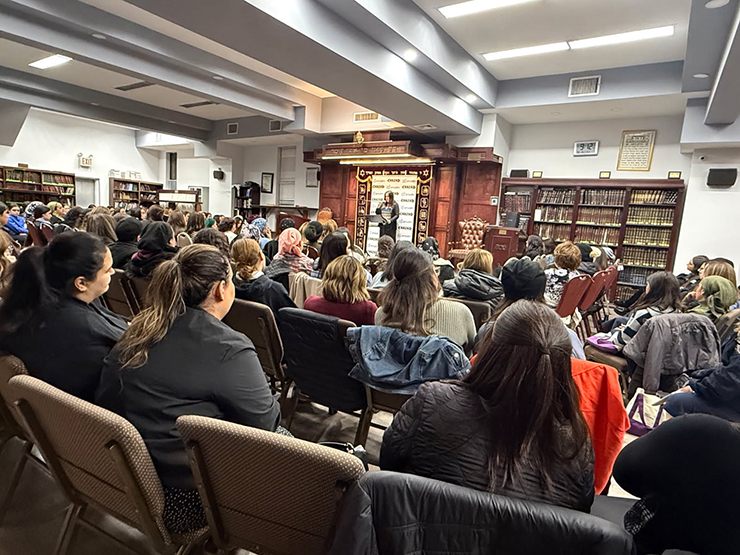
Osot Chayil, an organization that supports chareidi women whose family members have joined the army, continues to encourage those who turn to it. This week, they invited me to join them for a Day of Appreciation with Michal Herzog, wife of President Isaac Herzog.

The chasan broke the glass, and the guests screamed “Mazal Tov!” While the simchah was palpable, there was not a dry eye in the hall. This was no regular wedding. It was special in more ways than one. The chasan and kallah had special needs, and they were building a bayis ne’eman b’Yisrael!