

Governor Kathy Hochul signed legislation on December 1 authorizing the building of a Holocaust memorial at Empire State Plaza in Albany. Facing the ornate State Capitol in Albany, the long processional walkway serves as New York’s version of the National Mall, with monuments to veterans, Martin Luther King Jr., firefighters, police officers, and sculptures by prominent artists.
“With the first-ever state-sponsored Holocaust Memorial, we are honoring the victims and survivors of the Holocaust while ensuring that all visitors have a place to remember and reflect on what the Jewish community has endured,” Hochul said. “New York has zero tolerance for hate of any kind, and with this memorial, we reaffirm our commitment to rooting out antisemitism and ensuring a peaceful and thriving future for all.”
Legislation for the memorial was sponsored by State Sen. Patricia Fahy and Assemblywoman Gabriella Romero, with numerous co-sponsors that include local Assemblymembers Sam Berger, David Weprin, Stacey Pheffer-Amato, Ed Braunstein, Andrew Hevesi, Mayor-elect Zohran Mamdani, and Ed Ra, whose district covers West Hempstead. In the Senate, local co-sponsors included Patricia Canzoneri-Fitzpatrick, whose district covers the Five Towns.
“Creating a dedicated Holocaust Memorial where survivors, family members, and our broader community can gather to reflect and remember will memorialize the six million Jews and millions of others who died at the hands of Nazism, fascism, and the Banality of Evil,” Fahy said. “Intolerance and prejudice only persist and spread when good people stand by and do nothing, and this memorial cements New York’s and the Capital Region’s commitment to combatting hate wherever it may hide.”
The announcement took place a week after Queens Borough President Donovan Richards stood alongside Queens Jewish community leaders to break ground on a Holocaust memorial next to Queens Borough Hall in Kew Gardens. Both of these announcements are taking place at a moment when the Jewish community in New York feels insecure as a result of progressive lawmakers advocating for a boycott of Israel and organizations that support the Jewish state. In the past two weeks, anti-Israel demonstrators hurled insults and attempted to block participants from entering the Park East Synagogue when it hosted an event for Nefesh B’Nefesh. In Brooklyn, a public school rescinded an invitation for Sami Steigmann to speak, based on his views regarding the war in Gaza.
“We’ve had Holocaust survivors speak in the past,” principal Arin Rusch told CBS, adding, “It can really help build empathy and counter antisemitism. I also don’t think that Sami’s presentation is right for our public school setting, given his messages around Israel and Palestine. I’d love to explore other possible speakers.”
The Holocaust ended 80 years ago, but its impact includes how it is taught and memorialized in contemporary society.
Recent events have shown that mandated Holocaust education programs failed to curb antisemitism in schools and social media, as images of the Warsaw Ghetto in ruins are compared to Gaza City in a campaign that culminated with the International Court of Justice ruling that the Israeli war against Hamas constituted a genocide.
“Unfortunately, the very smart bet that we made on Holocaust education to serve as antisemitism education, in this new media environment, I think that is beginning to break down a little bit,” former White House speechwriter Sarah Hurwitz said last month at a conference hosted by Jewish Federations of North America. “It may be confusing some of our young people about antisemitism, because they learn about big, strong Nazis hurting weak, emaciated Jews.”
On social media, Palestinians are depicted as a people of color oppressed by white Jews, she added.
In her announcement of the memorial in Albany, Hochul noted that she also secured $35 million to boost safety and security for certain organizations at risk of hate crimes, and a statewide plan to combat antisemitism.
While expressing support for the Jewish community and the state of Israel, Hochul and Richards also endorsed Mamdani for mayor, and they did not call out his sponsorship of Not on Our Dime and disparaging Israel as an “apartheid state” engaging in “genocide.”
A better application of understanding the Holocaust is to recognize that it began with the exclusion of Jews from German government institutions, public spaces, and schools. Following his return from Israel, outgoing mayor Eric Adams issued executive orders forbidding city agencies from discriminating against Israel, Israeli citizens, and entities associated with Israel. While we await state legislation that would prevent protesters from standing too close to houses of worship, Adams also issued an order directing the NYPD to evaluate proposals on banning or further regulating protests within 15 to 60 feet of houses of worship.
Upon taking office, Mamdani can rescind any executive order issued by Adams, which could add to tension with incoming Comptroller Mark Levine and Council Speaker Julie Menin, who support the city’s investing in Israel Bonds.
Looking at the state memorial’s design, it has elements evoking brick walls, barbed wire, and boxcars for a visual experience, quotes from survivors, images and objects associated with the victims. Its placement at Empire State Plaza cements New York’s identity as a historic home for Jews. Much more important concerning Holocaust education and combating antisemitism are the legislation and policies coming from the State Capitol as they impact the future of Jews in this state.
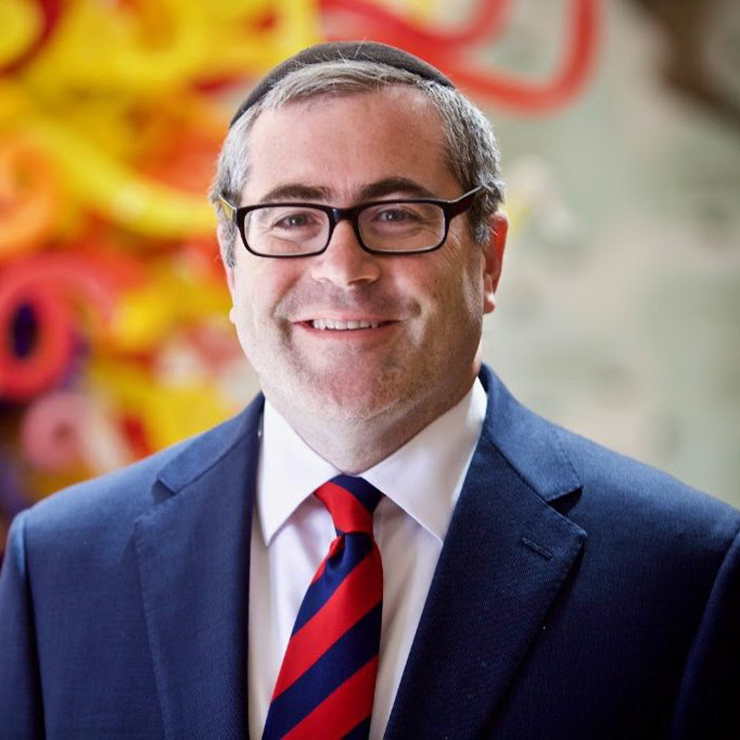
Daniel Rosen is the co-founder of a nonprofit technology company called Emissary4All, which is an app to organize people to impact the narrative and move the needle on social media and beyond. He is the co-host of the podcast Recalibration. You can reach him at This email address is being protected from spambots. You need JavaScript enabled to view it..