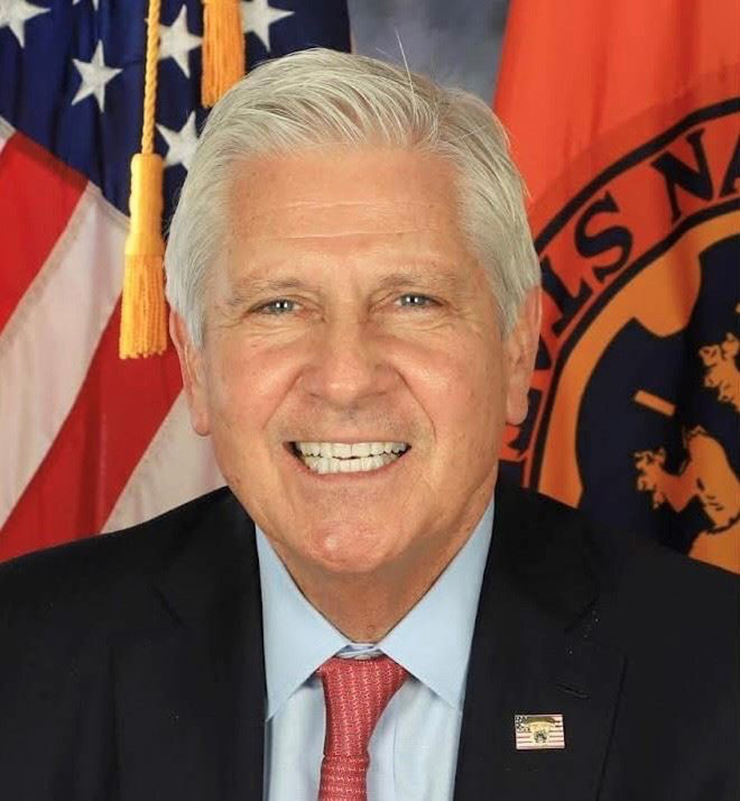


On Wednesday night, June 17, members of the community gathered at the Young Israel of Queens Valley for the first lecture in a series on Healthy Relationships. The event was sponsored by Chazaq.
Dr. Meir Wikler, a well-known speaker, marriage and family counselor, and therapist, delivered an informative and important lecture on the relationship between parents and their children-in-law. Drawing on sources from the Torah, the Gemara, and Pirkei Avos, he responded to questions that audience members had submitted in advance.
Dr. Wikler began with a brief introduction. Any relationship, he taught, can be compared to a bank account. A person can write checks all day long as long as there is money in the account. However, if someone writes a check for even one dollar more than what is in the account, the account can be shut down, and it can then be difficult to reopen it.
In a relationship, he explained, deposits are praise, kind words, and appreciation. Withdrawals are complaints or criticism. For a relationship to flourish, there must be more deposits than withdrawals. If there are more withdrawals than deposits, the relationship can become severed.
He noted that parents can sometimes criticize their own children because they have a long history with them, built on years of living together and making many deposits. With sons-in-law and daughters-in-law, however, it is different territory. There is no such history; so in a sense, the account is empty. If parents begin with criticism, it can cause alienation that is very difficult to repair. The bottom line, he said, is that parents should never criticize a child-in-law.
Dr. Wikler shared that his own in-laws never criticized him. He stressed that in order to have a healthy relationship with one’s grandchildren, one must never criticize a child-in-law.
Dr. Wikler then turned to questions that had been submitted before the lecture.
The first question came from a newlywed woman dealing with a difficult pregnancy. Her mother-in-law expected her to help, but she did not feel well enough. The mother-in-law showed that she was upset through smirks and comments, and the young woman said she felt uncomfortable in her house.
Dr. Wikler said that there is a pasuk in B’reishis that addresses this issue. The pasuk says that a man should leave his parents and cling to his wife, and they should become one flesh. The principle, he explained, is that there must be a strong separation from parents, and a person’s first allegiance must be to his or her spouse. A person should always choose his spouse before his parents or in-laws. This is the way to establish a bayis ne’eman.
He added that Rav Dovid Cohen asked why the kallah, mother, and mother-in-law circle the chasan seven times. He answered that the wife is supposed to be a guard for her husband, and he for her, in spiritual ways. They have to be a unit. They need to know that their loyalty is to each other.
Returning to the original question, Dr. Wikler advised that the husband should explain how his wife is feeling and that he does not appreciate the smirks and negative remarks. He should tell his mother that she needs to make it more comfortable for his wife to be there, and if she cannot, they will have to limit their visits. The husband, Dr. Wikler emphasized, needs to stand up for his wife.
He stressed that one’s primary allegiance is to one’s spouse and to the marriage. In-laws and parents are not entitled to impose their opinions on a couple’s family.
The next question came from a mother of two married daughters. “My daughters stopped coming to visit us, and I don’t recall anything I did,” the mother wrote. “They still visit their in-laws. I asked them what the issue is, but they don’t want to address it.”
Dr. Wikler answered by citing a din in the Shulchan Aruch that if a Jewish king is insulted, he is not allowed to excuse it. If a person dishonored the king, he was liable to the death penalty, because the king is not allowed to be mochel on his kavod. Parents, on the other hand, are allowed to be mochel on their kavod.
He advised the mother to tell her children that she is mochel on her kavod and that she wants to hear what they have to say. She should tell them that she wants them to be honest about why they do not want to come, so she can work on the issue.
Dr. Wikler next addressed a question from someone who had seen her married children arguing and wanted to know what she should do.
He answered that Pirkei Avos teaches that one should not appease a fellow person at the time of his anger. When someone is angry, he explained, trying to appease him will often add fuel to the fire.
If someone sees her child arguing with his or her spouse, Dr. Wikler said, that indicates there is stress in the relationship, especially if they are arguing in front of a parent. It likely means they are also arguing when the parent is not present. He recommended waiting 24 hours for them to cool down and then approaching one’s own child. The parent can suggest that the couple speak to someone who can help them get along better, because ongoing arguments are not good for their children.
Dr. Wikler shared the poignant story of an Iraq War veteran who had to kill people, saw friends killed, and was wounded himself. When asked what the most traumatic time in his life was, the veteran did not point to any of those experiences. Instead, he said it was lying in bed as a child and hearing his parents argue.
Dr. Wikler emphasized that arguing is one of the worst things for children.
The next question involved a mother-in-law who says degrading things about a husband to his wife. The wife defends him, but the husband is worried that his wife will absorb this negative attitude toward him.
Dr. Wikler responded that the husband needs to set limits with his mother. He should tell her that she may not say denigrating comments about him to his wife.
Rav Yisrael Salanter taught that changing midos is the hardest thing to do. However, Dr. Wikler said, parents can learn to make accommodations. He added that, practically speaking, parents control access to grandchildren. A person needs to have a good relationship with a son-in-law or daughter-in-law to ensure that access. Grandchildren are the greatest gift, he said. If a person criticizes a child-in-law, it can jeopardize the relationship with the grandchildren.
The final question came from a woman who wants to move her family out of town for good reasons, but her in-laws object and are guilt-tripping the couple.
Dr. Wikler quoted a teaching of the Rambam that says a person cannot be forced to live in a place where he does not want to live. Of course, one must honor one’s parents, he said, but that does not give parents the right to dictate where their children must live.
The community is grateful for this informative and vital program on human relationships.
By Susie Garber