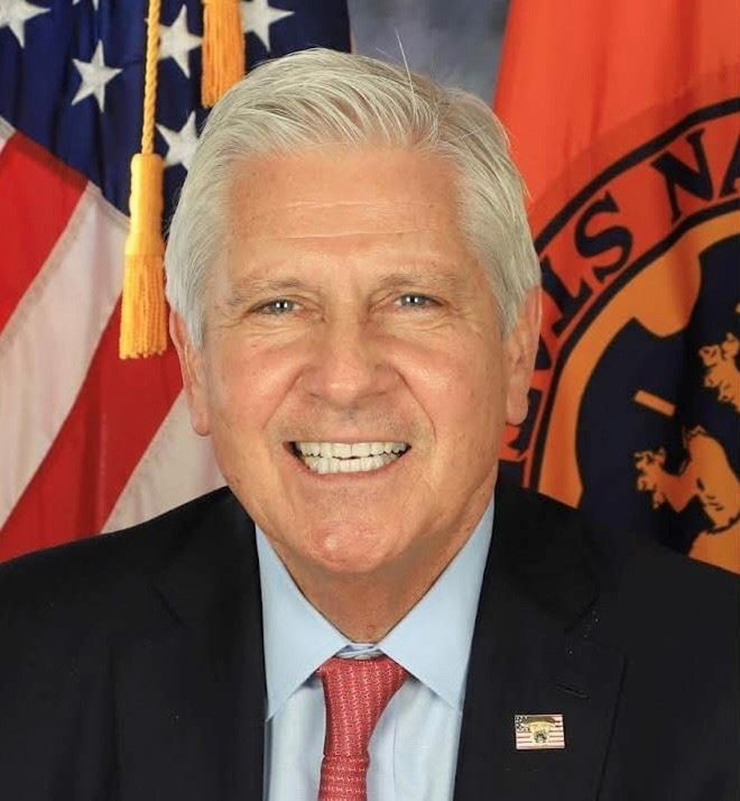


On Monday afternoon, children in small velvet yarmulkes spun dreidels on the tables of the New York State Executive Mansion in Albany, surrounded by Jewish leaders, activists, and state officials who had traveled from across New York for Governor Kathy Hochul’s annual Pre-Chanukah celebration.
In the midst of the reception, Governor Hochul signed S5784/A7614 into law, officially establishing New York’s first state-sponsored Holocaust memorial. The site will be located at the Governor Nelson A. Rockefeller Empire State Plaza in Albany, a civic space passed by millions of students, visitors, and government employees each year. The Governor noted that placing the memorial in such a central location ensures that the Holocaust remains part of public awareness and not pushed to the margins.
The law directs the State Office of General Services to oversee the memorial’s design, programming, and placement. Holocaust-remembrance organizations must be consulted throughout the process to ensure historical accuracy, survivor input, and strong educational value. The bill passed unanimously in both legislative chambers, including a 144 to 0 vote in the Assembly, a rare bipartisan moment during a time of rising antisemitism.
The emotional weight in the room could be understood only by looking at the long path that led to this moment. More than a decade ago, Dr. Michael Lozman founded the Capital District Jewish Holocaust Memorial, believing that the Capital Region needed a protected place for Holocaust memory and education. The memorial was originally planned for Niskayuna, near the Most Holy Redeemer Cemetery. Survivors donated artifacts, educators shared ideas, and community leaders worked to advance the project. When the Niskayuna planning board approved a revised plan in 2019, the memorial seemed ready to move forward.
With antisemitic incidents increasing and Holocaust knowledge declining, CDJHM leadership reconsidered whether a smaller suburban site could have the broader impact they envisioned. Under architect Dan Dembling, discussions shifted to the possibility of a statewide memorial located at the Empire State Plaza, a site visited regularly by schoolchildren and symbolic of New York State itself.
State Senator Patricia Fahy and Assemblymember Gabriella Romero, who represent the Albany region, understood the urgency and educational opportunity. Working closely with CDJHM, the Jewish Federation of Northeastern New York, and Holocaust-education partners, they introduced legislation in May 2025 calling for a state memorial at the Plaza. The bill moved quickly through both chambers and reached the Governor’s desk on December 1. Supporters agreed that New York, home to the largest Jewish population outside Israel, should have an official state Holocaust memorial rather than relying only on private or municipal efforts.
The Pre-Chanukah gathering brought together many well-known figures from across New York’s Jewish community. Mark (Meyer) Appel, Gil Cygler, Joel Eisdorfer, R’ Moishe Indig, and Chanina Sperlin were among those present, along with Shai Franklin, Rabbi Yeruchim Silber, Director of Government Affairs for Agudath Israel in New York, and Rabbi Yehiel M. Kalish, CEO of Chevra Hatzalah. Assemblymember Scott Bendett, who represents parts of the Capital Region, also attended. Many expressed appreciation for Governor Hochul’s Jewish liaisons, Jake Adler and Eva Wyner, whose work ensures that Jewish concerns reach the Executive Chamber with sensitivity and urgency.
Details of the memorial’s final design have not yet been released. However, earlier CDJHM concepts offer insight into its possible direction. Prior renderings envisioned a contemplative space incorporating symbolic arches, textured walls, and interpretive elements that evoke memory through subtlety rather than shock. The educational framework, developed with input from the ADL, regional Holocaust-education partners, and local institutions, focuses on understanding the historical forces that led to the Holocaust, learning from survivor testimony, recognizing modern forms of hatred, and encouraging moral responsibility.
The memorial fits into a broader statewide response to rising antisemitism. In recent years, Governor Hochul created the Hate and Bias Prevention Unit, introduced a statewide plan to combat antisemitism, and expanded security grants for synagogues, yeshivas, and Jewish institutions.
As the menorah was lit in the Executive Mansion and families sang familiar Chanukah melodies, the moment carried a clear message. New York intends to confront rising hatred directly and preserve Holocaust memory for future generations. In a time of increasing darkness, state leaders emphasized that the commitment to remembrance and to fighting antisemitism must remain strong.
By Shabsie Saphirstein