

OU Kosher Warns of Reduced Availability as Agri Star Plans Its Recovery in Postville
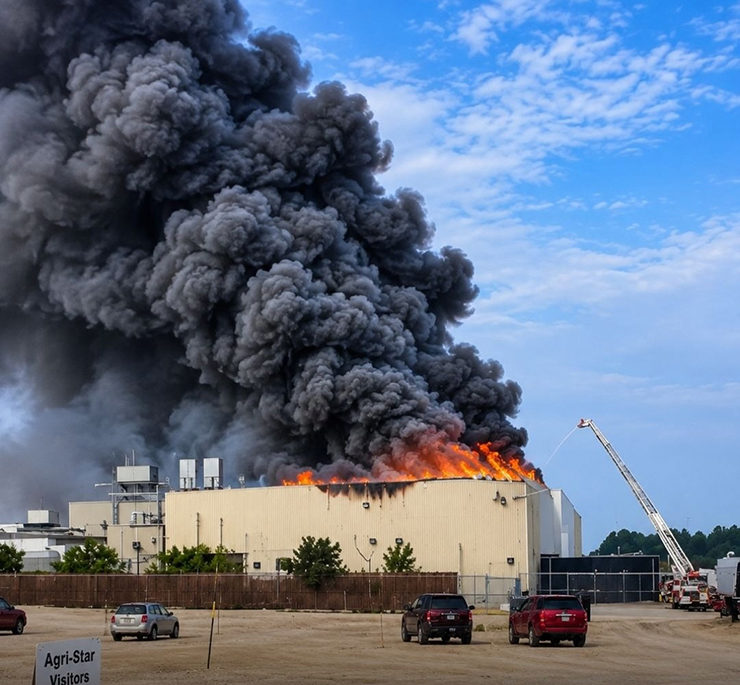
A devastating fire at the Agri Star Meat & Poultry plant in Postville, Iowa, has disrupted one of the most important links in the American kosher food supply. The July 28 blaze caused extensive damage to the OU Kosher-certified facility, raising concerns about meat and poultry availability ahead of the fall Yom Tov season and leaving hundreds of local workers facing uncertainty.
For kosher consumers in New York and throughout the country, a fire at a meat-processing plant in rural Iowa may initially seem distant. Its effects, however, may soon be felt at supermarket meat counters, butcher shops, restaurants, caterers, yeshivos, camps, nursing facilities, and other institutions that depend on a steady supply of kosher beef and poultry.
Rabbi Moshe Elefant, CEO of OU Kosher, warned consumers shortly after the fire that the disruption is significant enough to affect supermarket availability.
“The damaged plant is responsible for a significant portion of kosher beef and chicken slaughtered and sold in the US,” Rabbi Elefant said. “The loss is significant enough that we want to alert kosher consumers that they will likely feel the impact in the coming weeks, including reduced supermarket availability.”
OU Kosher is working with Agri Star and other OU-certified slaughterhouses to increase production and minimize the disruption.
That process is considerably more complicated than simply transferring production to another meat plant. Kosher meat production requires trained shochatim, mashgichim, approved facilities, specialized procedures, proper seals and packaging, and continuous rabbinic supervision. Other facilities may be able to increase output, but replacing the capacity of a major plant cannot happen immediately.
Consumers may also not see the full impact at once. Meat and poultry processed before the fire continue moving through warehouses and distribution networks. As existing inventories are depleted, certain cuts, brands, or specialty products could become more difficult to find.
That does not mean kosher supermarket shelves will be empty. Retailers can continue sourcing products from other domestic and imported suppliers, with availability likely to vary by product, distributor, and region.
It is also too early to know what the fire will ultimately mean for retail prices. A sustained reduction in supply could place upward pressure on prices, particularly as the fall Yom Tov season approaches, when demand traditionally increases. At this point, however, the extent and duration of any price impact remain unclear.
Large-volume purchasers, including caterers, yeshivos, camps, restaurants, and nursing facilities, could face additional challenges if particular cuts or products become unavailable. Some may need to adjust menus or turn to different suppliers while the market adapts.
Beyond the kosher marketplace, the fire represents a serious economic blow to Postville. Agri Star is Allamakee County’s largest employer and has long played a major role in the economy of the small northeastern Iowa community. Hundreds of jobs are tied to the facility, giving the shutdown consequences far beyond the kosher food industry.
The current crisis also carries historical significance.
The facility previously operated as Agriprocessors and was once among the largest kosher slaughterhouses in the country. A massive federal immigration raid in 2008 was followed by the company’s bankruptcy, shaking Postville and disrupting the kosher meat market. The facility was sold in 2009 and subsequently reopened as Agri Star Meat & Poultry.
Nearly two decades later, the plant is again confronting a disruption with consequences extending far beyond Iowa.
Agri Star has said it intends to remain in Postville and rebuild, although no firm timetable for the resumption of full production has been announced. Until then, other kosher processors will play an increasingly important role in meeting demand.
Premier Kosher in Ontario, Canada, is one potential source of additional supply. The company produces kosher beef, chicken, turkey, and lamb under several recognized kosher certifications, including the Orthodox Union. Additional production from Canadian and American suppliers could help ease pressure on the market, although the amount of Agri Star’s lost capacity that can be replaced remains uncertain.
The July 28 blaze also came only months after another fire at the Postville facility. On May 13, firefighters responded to a fire in the boiler and mechanical area of the plant. Employees were safely evacuated, no injuries were reported, and that incident was contained without the widespread disruption caused by the latest fire.
Alongside concerns about supply, OU Kosher is taking additional precautions to protect the integrity of kosher meat entering the marketplace.
“Unfortunately, when supply is limited, it creates an opportunity for unscrupulous individuals who seek to make money by preying on the well-meaning, kosher-observant public,” Rabbi Elefant said.
OU Kosher has instructed its mashgichim to exercise heightened vigilance by verifying that incoming meat and poultry carry the proper kosher identification and required seals, carefully inspecting labels and packaging, accepting shipments only from approved suppliers and distributors, and immediately reporting any irregularities before allowing products into inventory or production.
For consumers, the guidance is straightforward: Purchase meat and poultry from reputable retailers and be wary of products with damaged seals, altered packaging, questionable labels, or unclear certification.
The fire has also highlighted a broader vulnerability in the American kosher food system. Kosher meat production is concentrated among a relatively small number of specialized facilities. When one major processor goes offline, its capacity cannot simply be replaced overnight.
How severe or prolonged the disruption becomes will depend on how quickly additional production can be brought online and when Agri Star can resume meaningful operations.
By Shabsie Saphirstein