
“Why would Forest Hills resident Noach ben Avraham want to convert to Judaism, especially now?” is a question that hangs in the air among his fellow Jews. “Their question echoes centuries of trauma, amplified by the recent surge of anti-Semitism,” he said.
Within two weeks of living openly as a Jew, including wearing a kippah, he experienced more hate than he had in his entire lifetime. A man shouted at him on the subway that he was going to hell for not following the true messiah. “Another time, someone shouted, ‘Free Gaza! Death to Israel!’ as if my mere existence was an affront.”
“These moments, though unsettling, only reinforced my commitment – and that, too, is Jewish defiance. This is a fear I now live with and struggle to overcome. But the fear is not as strong as the pull I feel toward Judaism.”
Noach ben Avraham doesn’t want his full English name or picture in the paper – just his story of coming to Judaism. He was born of Kurdish ancestry and works as an engineer. His father was a physician who learned from doctors who had survived the Holocaust. His mother was a high school and college history teacher who also trained other teachers. His mother taught him that Jews are hard workers who try to make the world better. Noach ben Avraham said that, overall, Kurds are pro-Israel and less anti-Semitic because they, too, have been attacked.
For nearly three years, he went through a “rigorous” conversion process that involved studying and answering questions before the dayanim (judges) of the Rabbinical Council of America.
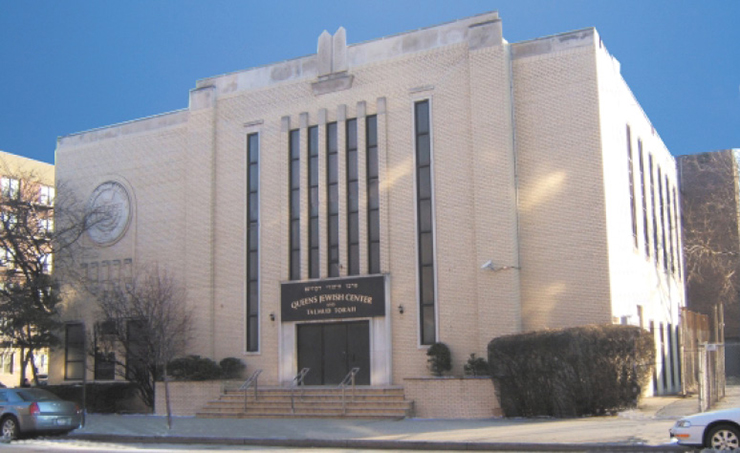
Part of the conversion process involves living in the community with a sponsoring rabbi. Almost three years ago, he came to live in Forest Hills to be under Rabbi Judah Kerbel’s tutelage and to be a part of the Queens Jewish Center community.
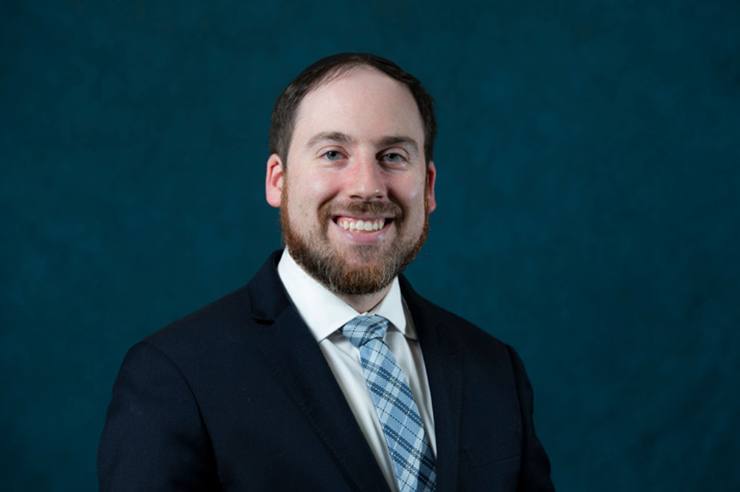
Rabbi Kerbel and the Queens Jewish Center community approach halachah with intellectual and emotional intelligence and kavod (respect). “That is something everyone in that community has in common.”
He especially credits the women at QJC, who “are the pillars of our community” and who welcomed him into their homes and spoke about Judaism with him at their kitchen tables. They showed him warmth and chesed, which “is really at the core of the Jewish faith, and I’m really grateful for them.”
“There is something about the peoplehood that I don’t think those who are enemies of the Jewish people understand. They don’t understand how strong this is. There is this feeling – the mishpachah – even if they argue.”
“Even with all the pain that this community has suffered, we know how to enjoy things, and we never let an opportunity pass without celebrating, having fun, and, you know, singing” on the Sabbath and Jewish holidays. “It’s a very unusual dynamic,” he said. QJC celebrated his conversion with a special Shabbos kiddush.
“It’s a connection I can’t quite define, a resonance with the culture, the history, the very idea of Judaism, even from before I truly understood it.”
Noach ben Avraham “loves being in shul, sitting with a plumber and a retired accountant, passionately debating whether a misplaced dot in the Talmud affects the validity of a document. And in that moment, I think, these are my people! This sense of intellectual belonging, of finding a community where curiosity and argument are a way of life, feels quintessentially Jewish – complex, nuanced, and resistant to easy explanations.”
“Arguing isn’t just tolerated but is an act of love among a people who relentlessly seek reason and weave logic into their very being.”
Speaking of why he converted to Judaism, he said, “Sometimes there are no answers. Not every choice is made because it’s rational, but because it sparks a flicker of joy. And perhaps, in the end, that’s the most Jewish reason of all.”
“Major life decisions are rarely as simple as a cost-benefit analysis. They’re born from something deeper, more visceral. They are the echo of something long buried, finally breaking through.”
Noach ben Avraham feels “blessed” to have had Rabbi Kerbel’s tutelage. Rabbi Judah Kerbel of the Queens Jewish Center said Noach ben Avraham’s “genuine sincerity” stands out.
“From the outset, I could tell that he was someone who was really seeking faith, wanted to connect to G-d, and was looking for an authentic spiritual journey.” He has “tremendous intellectual depth” and is always looking to expand his Torah knowledge “in its many facets.”
He is “someone of proactive generosity who embodies the values of tz’dakah, looking to help people in need however he can.”
He has a deep commitment to am Yisrael and the State of Israel. “Having worked for the ADL, he understands the issue of anti-Semitism, especially post-October 7, and how it has affected Jews around the world. While he previously fought it as an ally, it’s now an issue that he embraces as a personal mission.”
“Ruth joined the Jewish people, saying, Ameich ami and Elokayich Elokai – Your nation is my nation, and your G-d is my G-d. That is something that Noach really embodies in his choice to become Jewish. We are extremely fortunate to have him in the QJC family.”
By David Schneier