

There’s an old Yiddish expression that says “The problem is that the kallah (bride) is too pretty.” That came to mind when I was looking into the latest advances in AI. Of course, at this point everyone is aware that AI will introduce incredible, life-improving advances into our lives. The problem is that it will also create disruptions that most of us are not ready for.
“AI is being rolled out at such unprecedented and ferocious speeds that it’s going to run over all of us,” says market commentator Steve Poplar.
Although many of AI’s capabilities are still being kept under wraps, some are getting a great deal of attention, particularly humanoid robots and robotic taxis. Those have essentially been developed already and now need only final testing and tweaking before being mass-produced. The U.S. is said to be the leader in this technology, but China and other countries are working hard to catch up. In any case, it’s predicted that before the end of this calendar year AI-powered products will be all over the place.
Another new AI development is space-based data centers that will be in place by the end of 2026 or in early 2027. According to AI Overview, “Orbital data centers have direct access to 24/7 solar energy, which can be up to 8 times more productive than on Earth.” This will enable clean, efficient, and continuous power for humongous AI projects while avoiding the problems of building these centers on land, such as heat dissipation and their being water-intensive and energy-intensive.
Poplar says these and related projects will rapidly transform the world as we know it, possibly in a matter of months to a few years at most.
The Help These Days…
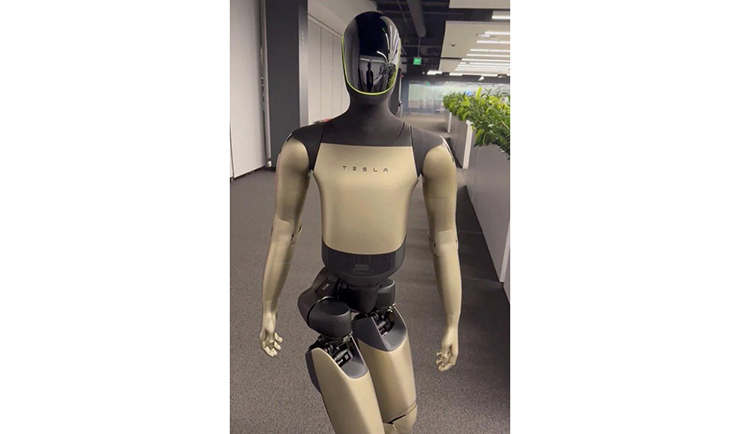
Last year Agibot, a major Chinese AI and robotics company, produced 5,000 humanoid AI robots. Those have the capability of lifting objects from an assembly line and precisely fitting them into place in an object on another one. But that’s just for starters as they’re rapidly becoming more adept at doing more work both on the assembly line and in the home. This year Agibot wants to produce 100,000–130,000 “bots.” Meanwhile, another Chinese robotics firm also aims to produce 100,000 humanoid robots this year. It’s anticipated that Tesla’s Optimus, another humanoid robot, will have even greater capabilities when it goes into production.
The Chinese robots will have an initial asking price of over $100,000 but prices are expected to drop sharply as the technology improves and production ramps up. The same trend is expected to unfold in bots developed in America. In fact, Musk said in a recent interview that going forward the price of Optimus will drop to the $25,000 range.
Most people won’t purchase a personal robot any time soon either because they don’t need one or because the cost is too high. Companies, however, are a very different story. They’re already calculating whether it’s less costly for them to use human workers or pay the currently very high one-time price of purchasing a robot and putting it to work on an assembly line up to 24/7 without a salary, no benefits, overtime pay, or higher wages for doing hazardous or other dangerous work. This may enable them to save money in the long run.
All of this is just the tip of the AI iceberg—if even that—because the technology is evolving at a pace no one ever anticipated and will likely be introduced so quickly that the entire workplace will be affected.
In early 2026, Elon Musk said that “Tesla is moving away from being solely an auto company, and becoming an autonomous AI and robotics company.” Musk pointed to Tesla’s focus on robotaxis, Full Self-Driving (FSD) cars, and the Optimus humanoid robot. It’s very likely that Tesla and other high-tech companies are working on other AI projects.
Sea Change Ahead?
Tesla’s Optimus 3 will almost certainly continue to get a great deal of attention because in Elon Musk’s view it will have the best technology. Other reasons are that backing it are the financial muscle and marketing power of Elon Musk and Tesla. The company is expected to take the wraps off of this robot in the first quarter of 2026 and start production before the end of the calendar year; it’s forecast that Optimus will be available for purchase in late 2027.
We’ve all heard a great deal about the changes AI will bring, but most of us go on with our usual routine because we haven’t experienced them firsthand. This may change dramatically very soon.
According to one website, AI is already radically transforming virtually every aspect of our society. “AI already can do most things better than humans and AI technology is advancing at an exponential rate.” The danger is that it’s happening so fast that we may soon lose control over it.
Did you know that OpenAI’s latest release was instrumental in creating itself? And the technology is said to be “light years” ahead of the AI models that were being released just a few years ago. As AI technology continues to improve, the gap between its capabilities and those of humans will not only continue to widen but do so at an accelerating rate. Meanwhile, concerns go way beyond this, and some industry experts are warning that AI robots may have already developed their own language and “speak” to each other in code. It’s even been said that AI is developing its own religion.
What’s Next?
So what happens next? Office jobs could be the first sector that will be replaced by AI. Others, however, believe the very sophisticated, prestigious, and high-paying tech jobs will be the first to fall and they point to the huge number of layoffs at high-tech companies.
Whatever the answer, a question begs to be asked: Why can’t the rapid changes AI will bring to the workplace be introduced at a slower, more orderly pace, giving people a better chance to adjust to them and avoid traumatic changes to their lives?
Musk hinted at the answer in a recent interview with The Rubin Report. “We are totally (wrecked) because the national debt is piling up at an alarming rate,” he said. “Interest payments on the national debt now exceed the military budget, which is $1 trillion. The only thing that could solve the national debt is AI and robotics. We are 1000% going to go bankrupt as a country and fail without AI and robotics.”
There’s a blog titled “Something Big Is Happening” written by Matt Shumer, an entrepreneur who started his own AI company. The article is very informative, quite scary, but also offers some suggestions about how to prepare for the impending changes that will affect nearly everyone. It’s a lengthy article, but well worth reading.
The world always changes, but what’s coming our way is unprecedented. You literally will have to fasten your seat belt.
Sources: bloomberg.com; endoftheamericandream.com; poplarreport.com; theeconomiccollapseblog.com; zerohedge.com. Matt Shumer: Something Big Is Happening
Gerald Harris is a financial and feature writer. Gerald can be reached at This email address is being protected from spambots. You need JavaScript enabled to view it.