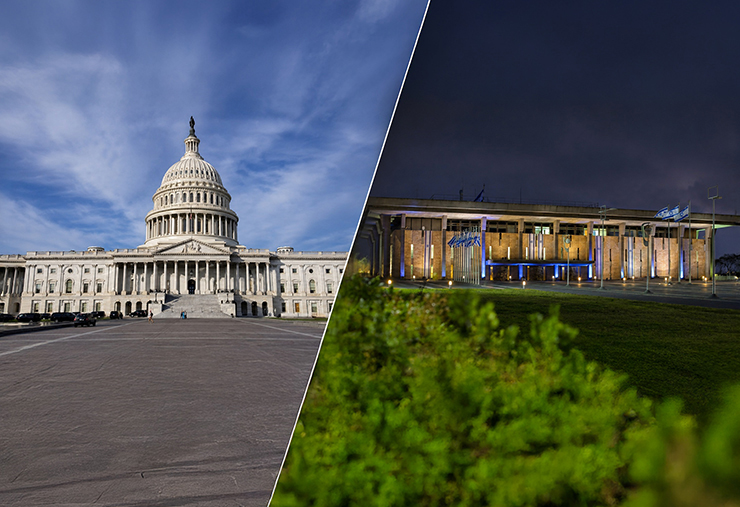
France Is Burning. New York Is Next—Unless We Stop It
These images coming out of France earlier this week should be seen by every single New Yorker, as...
 Queens Jewish Link
Connecting the Queens Jewish Community
These images coming out of France earlier this week should be seen by every single New Yorker, as...

(Sources: Sifsei Chaim, Rav Schwab)
The term gibor (mighty) is usually used in a comparative sense, referring to one force as stronger than another. Applied to human power, it implies relative strength among limited powers. When we apply the term to Hashem, however, it cannot mean comparison at all, since there are no competing forces; Hashem alone is the infinite, eternal source of all existence, utterly unlimited and never subject to weakening. Yet in addition to this basic explanation of Hashem’s gevurah, there are other ideas expressed in this word:

New York
A suspect was arrested after flying a swastika flag during New York University’s graduation ceremony. The incident occurred amid commencement events at Yankee Stadium, where the individual displayed the Nazi symbol in a provocative act captured on video by attendees.
We begin this segment with the powerful words of Rabbi Levi Yitzchak of Berdichev zt”l, with which we closed our last segment:
(Sources: Sifsei Chaim, Rav Hirsch)
Melech Ozer U’Moshia U’Magein
As we continue through the first brachah of Shemoneh Esrei, we encounter a phrase that encapsulates the many ways in which Hashem relates to and sustains His people:
(Sources: Rav Schwab)
Melech Ozer U’Moshia U’Magein:
Explanation 2
The previous article explained the Sifsei Chaim’s approach to the phrase “Melech ozer u’moshia u’magein.” This article will share Rav Schwab’s approach:
The Gemara in Berachos (60b) teaches that a person should accustom himself to constantly repeat verbally: “Kol mah d’avid Rachmana l’tav avid” — “Everything that Hashem does, He does for the good.” This Gemara is carried forward to the Shulchan Aruch and is a halachah.