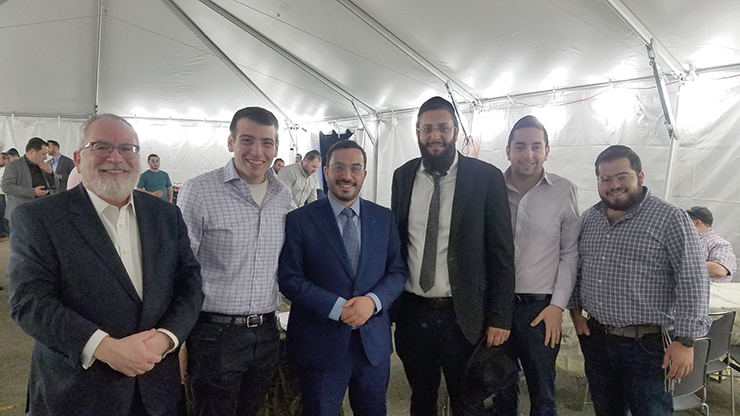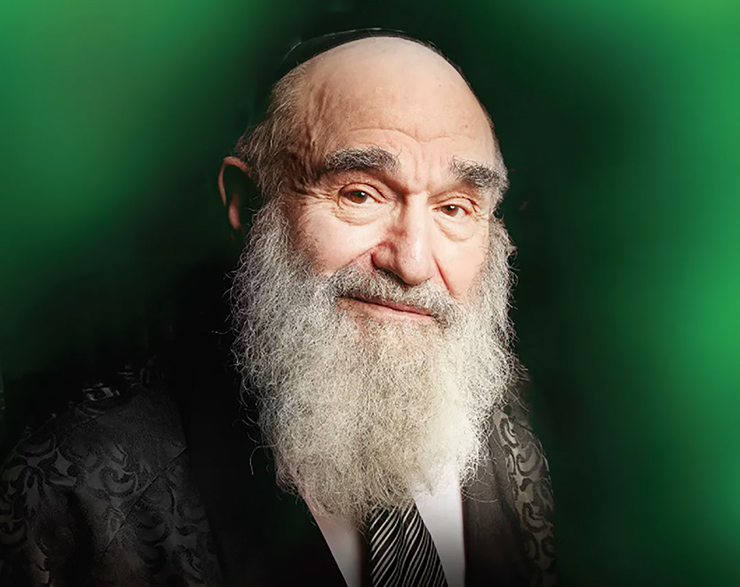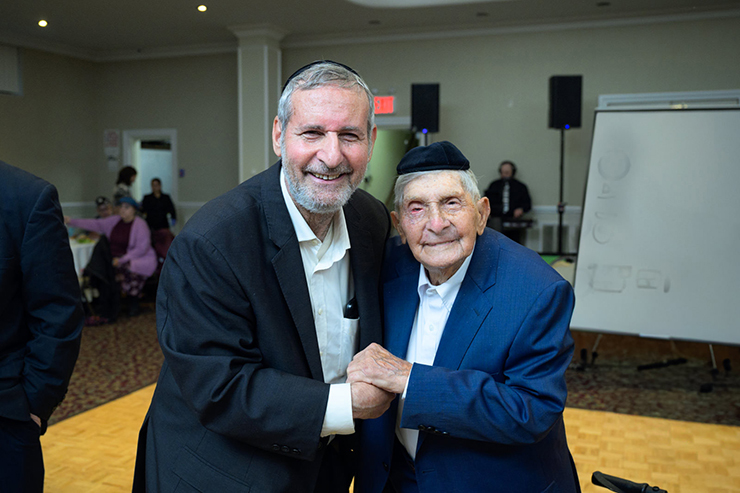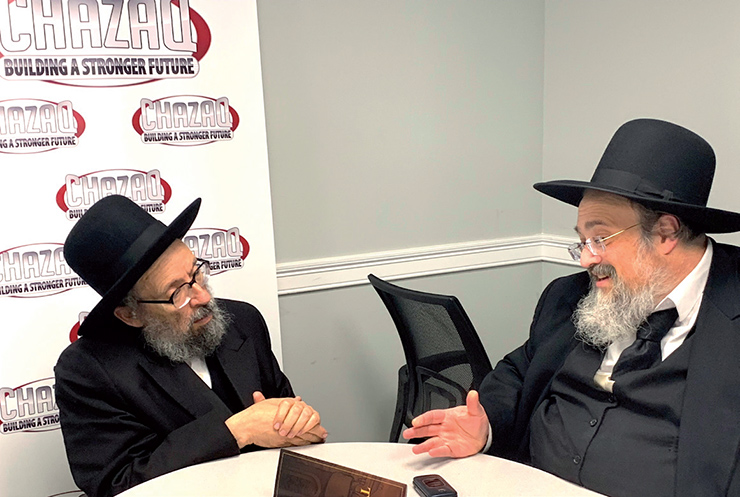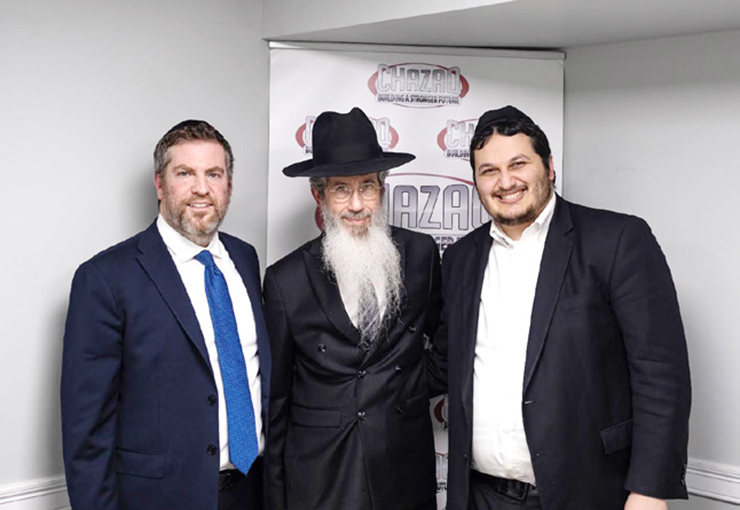
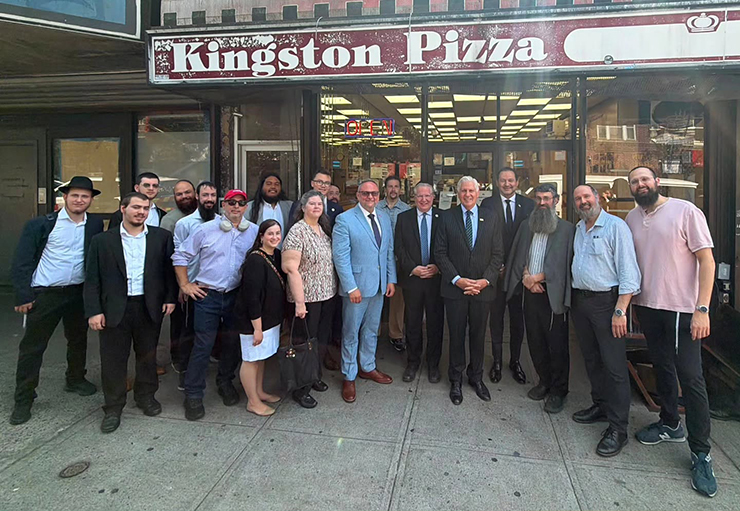

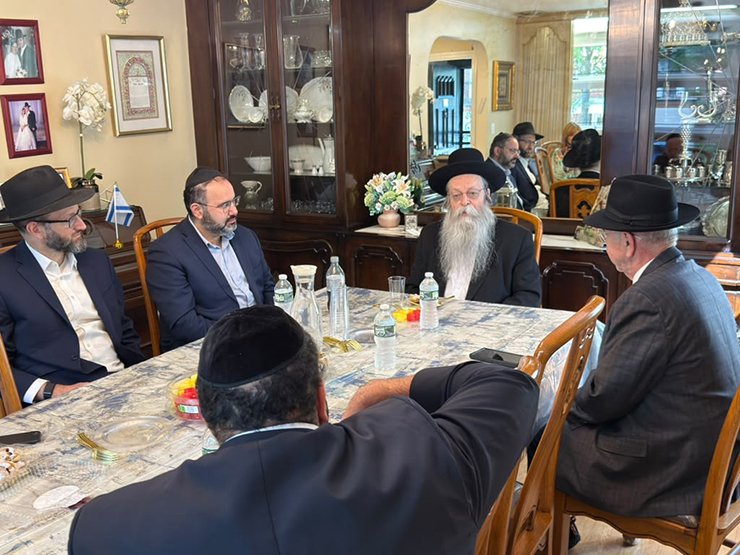
For one memorable Shabbos, Kew Gardens Hills became home to one of today’s respected Torah leaders. HaRav Shlomo Kanievsky, Rosh Yeshivah of Yeshiva Tiferet Tzion in Bnei Brak, and son of the late Maran Sar HaTorah HaRav Chaim Kanievsky ztk”l, spent the weekend hosted by Kehila Charm Circle on Park Drive East, allowing many residents to meet the Rav before concluding his visit with an intimate Sunday morning gathering on June 21 at the home of Yaakov and Atara Serle on 70th Avenue.
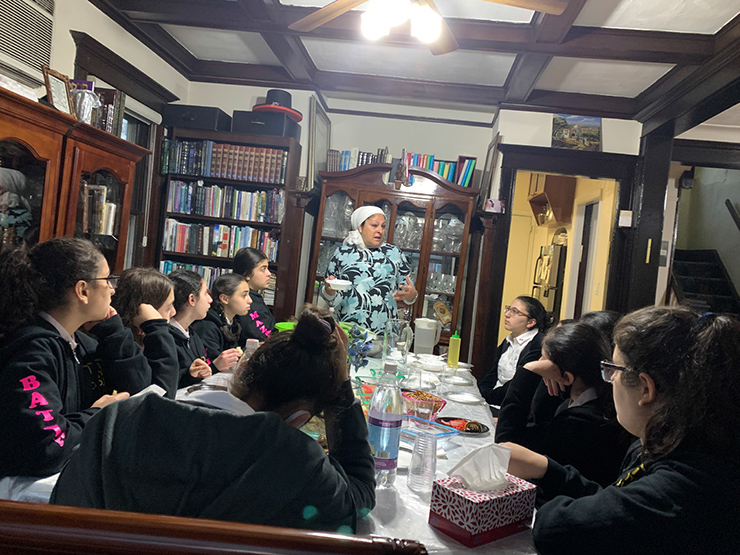
The gathering was intentionally kept small and personal, allowing attendees to ask questions during an informal session themed around “Growing Up with the Sar HaTorah.” In an era where the Sar HaTorah is often viewed through the lens of legend, these personal anecdotes offered a rare glimpse into the warmth and simplicity of his home, making his extraordinary commitment to Torah feel more tangible to the average person. The room was filled with community members eager to catch a glimpse of the legacy that HaRav Shlomo continues to carry forward. Throughout the gathering, a steady stream of community members came to receive brachos and listen to the Rav’s personal recollections.
Those gathered in the Serle home heard a side of the late Sar HaTorah known to very few outside his own family. HaRav Shlomo described an ordinary family life despite his father’s extraordinary stature. His father was an involved parent who carried his children on his shoulders, played with them, and made it a point to share lunch and dinner with his family every day. Among those recollections, HaRav Shlomo described his father’s deep respect for his mother, Rabbanit Batsheva Kanievsky a”h, noting that he would not begin a meal until she had eaten.
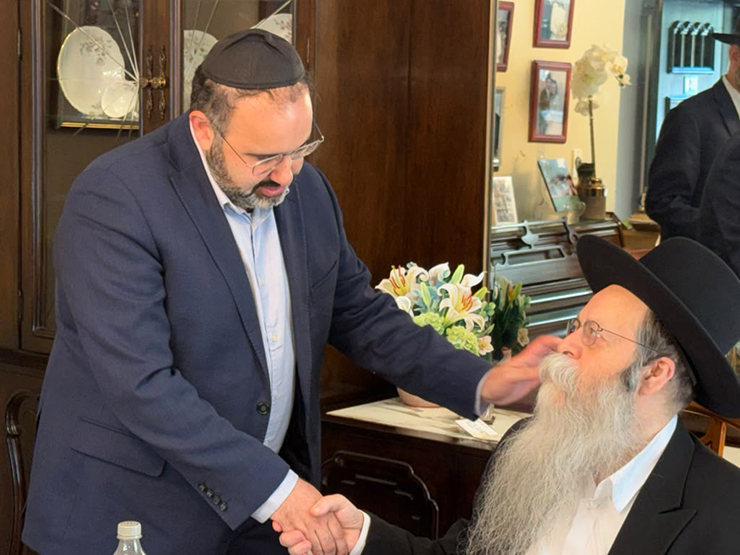
Among the stories HaRav Shlomo shared were remarkable examples of his father’s profound spiritual intuition. One involved an engaged man who came to seek a brachah for himself and his future bride. Upon reviewing the names on the paper, the Sar HaTorah remarked that he did not see a kallah, a confusion that only made sense later when it was discovered that the woman was not Jewish. In another account, he spoke of the daughter of a family living in northern Israel who was two weeks overdue. Her doctors were urging her to undergo surgery. When the father presented the situation, the Sar HaTorah corrected the timeline, stating, “Who told you it is two weeks late? I am telling you it is two weeks early.” He promised the birth would occur naturally in two weeks, and exactly two weeks later, at the same hour, the daughter gave birth without complication.
HaRav Shlomo also explained the meticulous standards his father applied to communal responsibilities. He noted that the Sar HaTorah was notably cautious about serving as sandak, accepting the honor only under circumstances he considered appropriate. In one instance, when he walked away from a bris after the shkiyah deadline had passed, he later clarified that he did not possess hidden knowledge; rather, he simply refused to serve as sandak after the permitted time, and only later did others learn that the circumstances surrounding the bris explained the Rav’s decision.
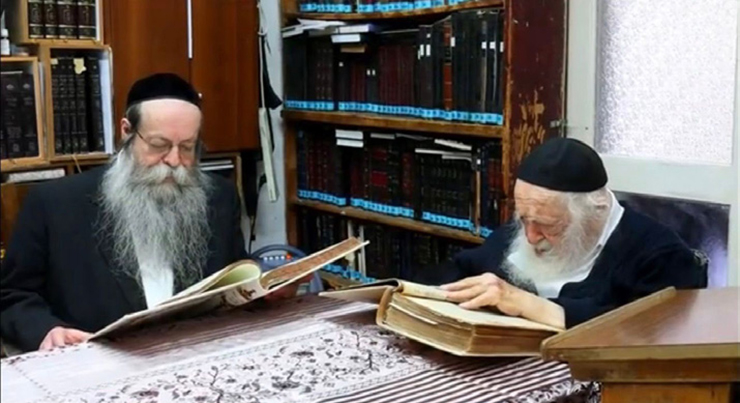
HaRav Shlomo also noted similarities between his father and his grandfather, the Steipler Gaon, Rabbi Yaakov Yisrael Kanievsky. He would often ask visitors whether they observed Shabbos. As people began anticipating that question, he started asking whether they wore tzitzis. Those close to the family recalled that many prepared themselves spiritually before approaching them, knowing the sincerity of their concern for every Jew. It was a poignant reminder that even the greatest Torah leaders were intensely focused on the spiritual well-being of the individual, prompting me to reflect on my own commitment to Yiddishkeit. Those who attended left not only with brachos, but with a deeper appreciation for the warmth, humility, and quiet greatness that defined the Kanievsky family.
By Shabsie Saphirstein