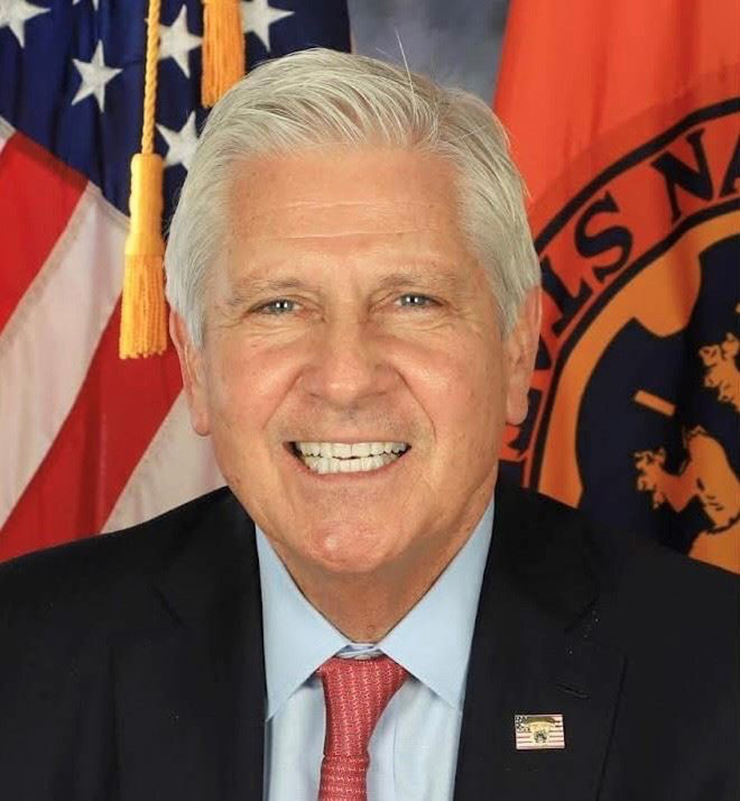


Ditza Or recently visited Ramat Beit Shemesh to share her journey as the mother of a released hostage. Before October 7, she explained, she was simply Ditza Or. But from that catastrophic day, her own identity faded; she became, exclusively, Avinatan’s mother. Life as she knew it stopped. She left her job, abandoned her hobbies, paused her travels, and could barely function as a grandmother. She was entirely consumed with the fight for her son.
While Avinatan was still in captivity, Ditza inspired thousands with her remarkable strength and emunah. But now that Avinatan is free, her perspective carries an even deeper weight. She shares the story of his survival, which begins just a few days before that fateful Simchas Torah.
On Yom Kippur 2023, Avinatan went to daven at Kikar Rabin in Tel Aviv. During the davening, he felt an overwhelming sense of division and strife in the air. He had a troubling intuition that the tefilot being recited were blocked, and he worried a national tragedy was imminent. The feeling was so intense that he left to find another minyan.
Almost two weeks later, on October 7, Ditza first saw the horrific news breaking on her mother’s caretaker’s phone. While she recognized the unfolding tragedy, she had no idea it was personal; she didn’t know Avinatan had gone to the Nova Festival.
A short while later, there was a knock at her door. To her bewilderment, she heard the voices of her son and daughter. It made no sense—they lived in Jerusalem and would never violate Shabbos by driving. They had arrived with a city council psychologist. Sensing the worst, Ditza initially refused to open the door. When they entered and told her Avinatan had been kidnapped, Ditza felt as though she had been struck by multiple bolts of lightning. She felt no emotions, thought no thoughts, and had no words. There was only total blackness.
Her daughter offered comfort: “Avinatan is not in the hands of Hamas. He is in the hands of Hashem.” It took weeks before Ditza could bring herself to watch the video of his kidnapping, but when she did, she found comfort in a stark reality: he was alive. And today, every terrorist visible in that video is dead. Ditza sought counsel from a Rav, who reminded her that Hashem is Kol Yachol—all-powerful. Avinatan’s capture was dictated by hashgachah pratis, divine providence, and he would return exactly when the time was right.
Inside the tunnels, Avinatan’s captors were afraid of him. Noting his immense physical and mental strength, they became convinced he was an undercover agent for the Shabak, the Israel Security Agency. Incredibly, even more than two years later, as Avinatan was finally stepping into a Red Cross vehicle to be freed, a terrorist asked him to tell the truth: “Were you really in the Shabak?”
Years earlier, when Avinatan first enlisted in the IDF, Ditza had given him an unusual parting demand: “Do not fall into captivity.” He thought it was a bizarre request at the time, but he agreed. Ditza reflects now that a person’s neshamah often knows the future before it happens. She acknowledges that while there were catastrophic systemic failures that must be investigated and prosecuted, on a spiritual level, this was Avinatan’s designated journey, and what happened to him was meant to happen.
Avinatan spent the entire length of his captivity in underground tunnels, chained to a wall for a full year. He had a lot of time to think. Those were holy moments of intimacy with Hashem. He remembered how, for years, his mother would wake up screaming from a recurring nightmare that something irreplaceable had been stolen from her, something she could not live without. He understood that a mother’s greatest treasure is her children. The fact that his mother knew this would happen gave him strength. He knew he wasn’t abandoned; he was part of a design.
Ditza shared that the lives of two of her children were saved due to their fulfillment of the mitzvah of Kibbud Av Va’Em. Another of her sons had been invited to the Nova Festival but declined because he didn’t want his parents to be alone for Yom Tov.
Avinatan was also saved because of this mitzvah. Avinatan tried to keep track of time while in captivity. On day 80, he heard the sounds of a fierce battle above his tunnel. On that day, there was an unsuccessful attempt to rescue Omer Shem Tov. Because of intelligence they had received, his captors moved him to a different location the day before. During the heavy fighting, a bomb breached the structure, filling the chamber with poisonous fumes.
Avinatan and his three captors had to dig and crawl through a suffocatingly tight space to escape. The first two terrorists made it through. It was then Avinatan’s turn. Because of his large frame, he got stuck. Avinatan looked up and spoke directly to Hashem. He laid out his defense: he reminded Hashem of how much he invested in honoring his parents—how he always fixed things around their house, built their sukkah, and called on Erev Shabbos. He referred to the Torah’s explicit promise of long life for those who honor their parents. Avinatan’s neshamah connected to Hashem, and suddenly, a physical path opened. The last terrorist yelled for Avinatan to give him his hand, but at that exact second, the tunnel collapsed, burying the terrorist alive. Avinatan crawled out, spared by his mitzvah.
While her son fought for survival underground, Ditza fought above to bring him home through interviews, rallies, a hachnasat Sefer Torah, and much more. When Breslov friends suggested a journey to daven at the kever of Rabbi Nachman in Uman, Ukraine, she agreed, having exhausted all conventional options. They went, they davened, they returned, and still there were no results. But Ditza explained that sometimes it can take 40 days for a tefilah to be answered.
A short time after they returned, Ditza’s daughter gave birth to a baby boy. The bris took place on the 17th of Tishrei, 40 days after Ditza and her friends had davened in Uman, in a shul named in memory of Gilad Elimelech, a soldier from their community of Shiloh who had been killed fighting above the very Gaza tunnels where Avinatan was held. It was during that time that the hostage deal was finally signed.
Avinatan finally came home after 738 days of captivity. After standard medical protocols at Beilinson Hospital, doctors confirmed a medical miracle: He was entirely sound in mind and body. While in the tunnels, Avinatan used to visualize his release. He pictured a quiet reunion: his father picking him up, pulling into a gas station for coffee, a cigarette, and maybe some shawarma. He was utterly shocked by the reality. Hundreds of everyday Israelis lined the highways, waving flags, singing, and dancing, escorting his convoy all the way back to his community.
Ditza originally intended to forbid any cameras from filming their reunion. But she changed her mind, realizing that Am Yisrael had been with her through her most challenging time. Avinatan’s return was not a natural event. Everyone’s tefilot and chasadim were what convinced Hashem to set him free.
Her message to the room was simple: Even when the darkness is total, everything can change in a single instant. We must hold onto the belief that the Geulah can arrive at any moment—suddenly, and when we least expect it.
Suzie Steinberg, (nee Schapiro), CSW, is a native of Kew Gardens Hills and resident of Ramat Beit Shemesh who publishes articles regularly in various newspapers and magazines about life in general, and about life in Israel in particular. Her recently published children’s book titled Hashem is Always With Me can be purchased in local Judaica stores as well as online. Suzie can be reached at This email address is being protected from spambots. You need JavaScript enabled to view it. and would love to hear from you.