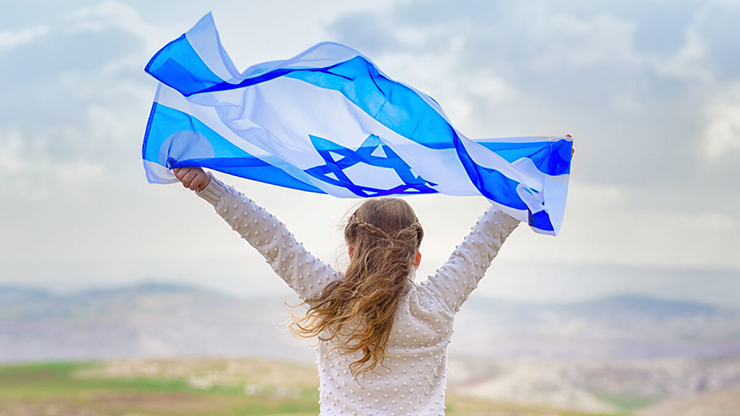
New Year. New Beginning. A Future In Israel.
As we welcome Rosh Hashanah and the beginning of a new year, all of us at Tivuch Shelly Real...
 Queens Jewish Link
Connecting the Queens Jewish Community
As we welcome Rosh Hashanah and the beginning of a new year, all of us at Tivuch Shelly Real...

On the night of Shavuos, many people have the custom to recite Tikkun Leil Shavuos. Tikkun Leil Shavuos is said to have been officially established by the holy Arizal, Rabbeinu Yitzchok Luria, zt”l. The chag of Shavuos celebrates the giving of the Torah to the Jewish people, but, according to the Midrash, Bnei Yisroel overslept on the morning they were due to receive the Torah and had to be woken by a shofar blast from Hashem.
Rashi mentions what the spies carried on their shoulders: “Eight of them took a grape cluster, one took a fig, and one took a pomegranate. Yehoshua and Calev did not take anything, for the intention of the others was to present a slanderous report, saying, ‘Just as its fruit is extraordinary, so its people are extraordinary.’ If you wish to know how much one of them carried, learn from the stones they set up at Gilgal: Each man carried on his shoulder one stone from the Yarden and set it up at Gilgal. The Sages weighed them, and each stone weighed forty seah. It is a fact that the load a person can carry on his shoulders is only a third of the weight of the load he can carry when others help him lift it.” (Sotah 34a)
Part of the Sotah process—determining the status of a woman accused of infidelity—entails writing a document that contains the Name of the Almighty, which is then completely erased in the bitter waters of the Sotah ritual. We are met with a true contradiction. On the one hand, the Torah warns against destroying even one letter of the holy Name. Yet, the Sotah process mandates the destruction of that very Name! How are we to understand this inconsistency?
Rashi mentions what the spies carried on their shoulders: “Eight of them took a grape cluster, one took a fig, and one took a pomegranate. Yehoshua and Calev did not take anything, for the intention of the others was to present a slanderous report, saying, ‘Just as its fruit is extraordinary, so its people are extraordinary.’ If you wish to know how much one of them carried, learn from the stones they set up at Gilgal: Each man carried on his shoulder one stone from the Yarden and set it up at Gilgal. The Sages weighed them, and each stone weighed forty seah. It is a fact that the load a person can carry on his shoulders is only a third of the weight of the load he can carry when others help him lift it.” (Sotah 34a)
One of the great Sephardic Chachamim of the previous generation was Chacham Rabbeinu Yehudah Tzadka zt”l, Rosh Yeshivah of Yeshivat Porat Yosef in Jerusalem. Rav Yehudah was a tzaddik who was characterized by his love of Torah and talmidei chachamim, as well as his desire and alacrity to perform mitzvos. He lived simply, did not indulge in any extravagances, and encouraged his students to be content without luxuries.
The Medrash Tanchuma states: “Moshe sent to summon Dasan and Aviram, but they said, ‘We will not come up.’ ‘We will not go’ or ‘We will not come’ is not written here, but ‘We will not come up.’ As it says, ‘A fool’s mouth is his ruin!’ (Prov. 18:17) They opened their mouth for a calamity by saying that they would die by going down and not coming up.