
How do you inspire a generation raised on instant gratification to embrace a life built on Torah, commitment, and spiritual growth?
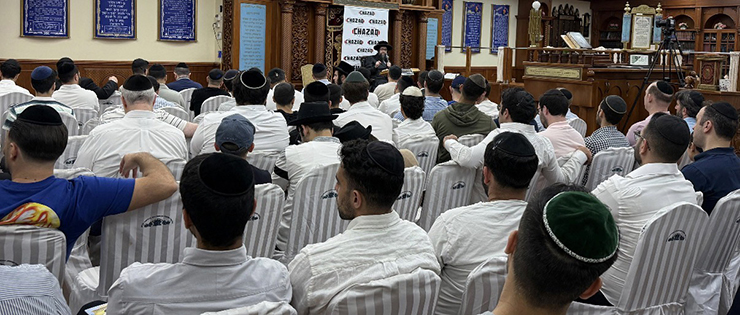
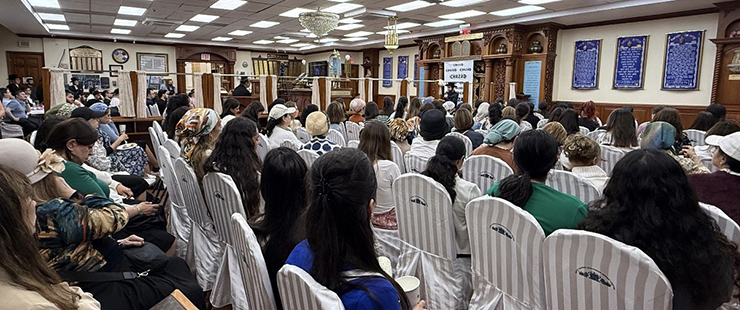
That question stood at the center of a powerful evening of chizuk on Sunday night at Beth Gavriel in Forest Hills, where HaRav Shulem Landau, the Rivnitz Rav, challenged attendees to rethink how Jewish identity is transmitted from one generation to the next.
In a world where people expect immediate results and constant stimulation, Rav Landau warned that simply teaching Torah is no longer enough. The task facing parents, educators, and community leaders today is helping Jews feel that Torah is their identity. Without that sense of belonging, even the sincerest efforts can struggle to take root.
Rav Landau began with an observation that caught many in the audience off guard. Referencing the recent playoff victory by the Knicks, the Rav described the sea of fans who erupted in celebration, chanting, “We won!” despite none of them ever stepping onto the court.
“What do you mean, ‘We won’?” Rav Landau asked.
The question became the evening’s central theme. Human beings naturally seek to identify with something larger than themselves. When a team wins, its supporters feel as though they themselves have won. Rav Landau explained that people attach themselves to causes, movements, and communities that provide meaning and identity.
The challenge facing Jewish parents and educators is ensuring that Torah and klal Yisrael become that primary source of belonging for the next generation.
If children feel genuine pride in their Jewish identity, many of the struggles facing contemporary Jewish education become far easier to overcome. Rav Landau explained that Hashem implanted this instinct within human beings so that Jews would ultimately find their identity in something far greater than themselves: Torah, klal Yisrael, and Hashem Himself.
Modern society conditions people to expect immediate rewards. Today’s generation increasingly seeks what Rav Landau jokingly called “cash on the table,” making the delayed rewards of spiritual growth more difficult to appreciate.
The answer, the Rav emphasized, is not more rules but more passion.
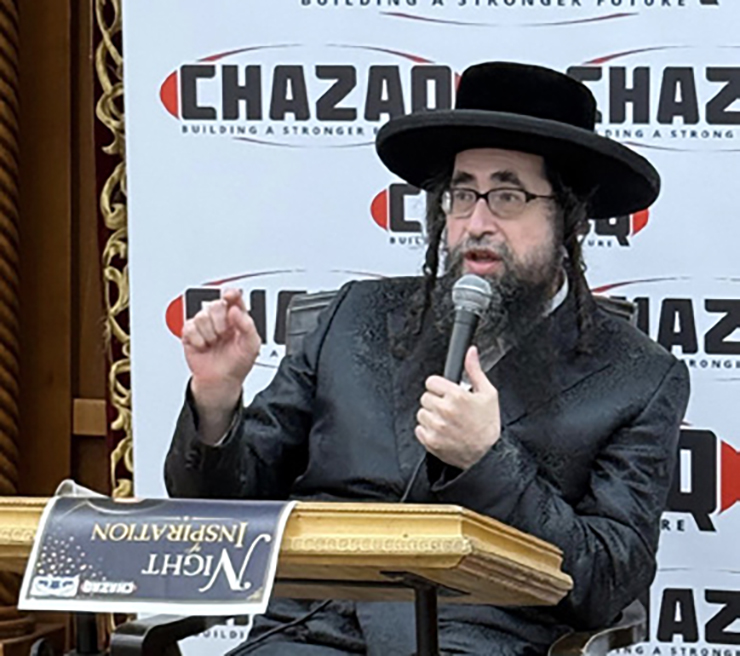
“We have to give our children the fire,” Rav Landau urged.
Children are inspired not by lectures but by what they see. A home where Torah is alive and where parents genuinely cherish their relationship with Hashem creates an atmosphere that children naturally absorb. A parent who lives with enthusiasm for Torah u’mitzvos passes that enthusiasm to the next generation in ways no lecture ever could.
Another major theme centered on blessing and success. Rav Landau challenged listeners to rethink how they view prosperity. Most people see themselves as vessels seeking to receive more. The Rav offered a different model: A cup can hold only a limited amount, but a pipe remains connected to a constant source of flow. A person who dedicates his resources and opportunities toward helping others becomes a conduit through which blessing flows. When Jews support Torah institutions and assist fellow Jews, they transform from limited recipients into channels of shefa.
An extended and candid question-and-answer session followed. The Rav fielded deeply personal questions ranging from overcoming jealousy and finding one’s purpose to managing anger and strengthening emunah.
One young man openly shared his struggle with feelings of anger toward Hashem. Rav Landau responded that the opposite of love is not anger but indifference. The very fact that a person wrestles with Hashem and seeks answers demonstrates that a relationship still exists.
Chazaq, which presented the evening and continues to operate programs in more than 20 locations, has helped more than 2,400 students transition from public school into yeshivah education.
Earlier in the evening, Chazaq Director Rabbi Ilan Meirov shared the story of a 12-year-old girl who recently contacted the organization after learning of another Jewish child attending public school whom she felt could benefit from a stronger Jewish educational environment. If a young girl could step forward and take responsibility for another Jewish child, Rabbi Meirov noted, certainly every adult could think of a relative, neighbor, or acquaintance who might benefit from greater exposure to Torah.
The evening served as a reminder that strengthening Jewish identity is not solely the responsibility of rabbanim and educators, but one shared by every member of klal Yisrael.